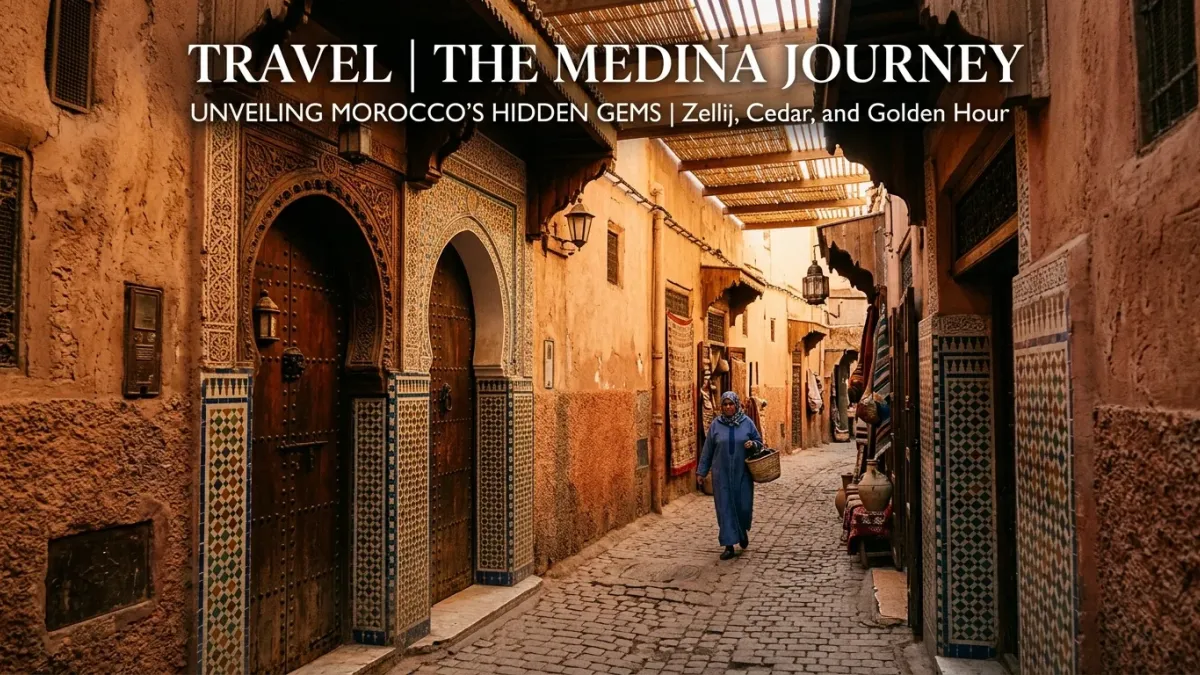
Beyond the Souk: Why Morocco's Medinas Are Your Next Adventure
Ever felt that pull to explore a place where time seems to stand still, where every turn reveals a story, and the air hums with centuries of history? That, my friend, is the magic of Morocco's medinas. Forget the polished tourist brochures – we're talking about the beating heart of Moroccan cities, ancient walled towns that are a labyrinth of sensory delights. While places like Fes and Marrakech often steal the spotlight, I’m here to tell you that the real treasures lie a little deeper, off the well-trodden paths. This guide isn't about ticking off famous landmarks; it's about helping you dive headfirst into the authentic, often hidden, soul of Morocco.
A "medina" (pronounced meh-DEE-nah), by the way, isn't just a market. It's the old, historical quarter of many North African cities, typically walled, car-free, and characterized by narrow, winding alleyways, traditional houses, artisan workshops, and bustling souks (markets). It's where daily life unfolds as it has for hundreds of years. So, if you’re ready to trade generic sights for genuine experiences, grab your sense of adventure and let’s get lost (in the best way possible!) in Morocco's captivating medinas.
Essential Prep: Navigating the Medina Like a Pro
Before you plunge into the bustling alleys, a little preparation goes a long way. This isn't just about comfort; it's about enhancing your experience and staying safe. First off, timing is everything. The best time to visit Morocco is during the shoulder seasons – April-May and September-October. During these months, the weather is pleasantly warm (expect highs of 20-30°C / 68-86°F), perfect for walking, and you'll avoid the scorching summer heat and the larger crowds of peak season. What is "shoulder season"? It's the travel period between the high and low seasons, offering a sweet spot of good weather and fewer tourists.
What to Wear, What to Bring, What to Expect
- Dress Code: Morocco is a conservative country. For both men and women, modest clothing is key. Think loose-fitting trousers or long skirts, and tops that cover your shoulders and chest. This isn't just about respect; it genuinely helps you blend in and avoid unwanted attention.
- Footwear: You'll be doing a lot of walking on uneven surfaces. Comfortable, sturdy walking shoes are non-negotiable.
- Navigation: Forget Google Maps inside the medina; it often struggles. Download an offline map like Maps.me before you go – it’s a lifesaver. Better yet, embrace getting lost. Honestly, some of my favorite discoveries have come from taking a wrong turn.
- Budgeting: Morocco can be incredibly affordable. A realistic daily budget for accommodation, food, and local transport (excluding flights) can range from $40-$70 USD for budget travelers, or $80-$120 for mid-range comfort. For example, a delicious tagine from a local eatery might cost $5-8, while a comfortable double room in a riad (traditional Moroccan house with an inner courtyard) can be found for $40-70/night.
- Safety: Medinas are generally safe, but pickpocketing can occur in crowded areas. Keep valuables secure and be aware of your surroundings. If someone offers to "guide" you, politely decline unless you explicitly need and agree on a price for their services beforehand.
Beyond the Postcard: Uncovering Morocco's Hidden Medina Gems
While Fes and Marrakech offer incredible medina experiences, there’s a whole world beyond them. These are the places where you can truly immerse yourself without the constant jostle of mass tourism. My advice? Spend at least 3-4 days in each of these to truly soak them in.
Chefchaouen: The Blue Pearl's Quieter Corners
Yes, Chefchaouen (pronounced shef-SHAW-en) is on many lists, but most tourists stick to the main squares. To find its real charm, wander the residential alleys early in the morning before the day-trippers arrive. Seek out the smaller squares like Plaza Uta el-Hammam and then drift off into the quieter residential streets. For an incredible sunset view that offers a panoramic sweep of the entire blue medina, head to the Spanish Mosque. You can find it just outside the medina walls to the east (GPS: 35.1764° N, 5.2599° W). It's about a 20-minute uphill walk, but the views are absolutely worth it. A fantastic family-run guesthouse like Dar Meziana (around $35-50/night) offers an authentic stay right within the blue streets.
Tetouan: The White Dove's Authentic Heart
Often overlooked by travelers rushing to Chefchaouen, Tetouan (pronounced TET-oo-ahn) boasts a UNESCO World Heritage medina that feels incredibly authentic and alive. Known as "The White Dove" for its striking white buildings, its medina is less commercialized than Fes's, offering a glimpse into daily Moroccan life. Dedicate a full day here, letting yourself get lost. Look for the artisan quarters – especially the leather tanneries (though smaller than Fes, they offer a similar pungent experience) and the jewelry souk. My personal favorite discovery here was a tiny, bustling bakery tucked away in a side alley, where fresh bread was being pulled from a wood-fired oven. Imagine this situation: you've been wandering for an hour, the scent of spices and mint tea fills the air, and then this incredible aroma of fresh-baked bread guides you to a hidden gem where locals are lining up. That's Tetouan.
Taroudant: The "Little Marrakech" Without the Crowds
South of Marrakech, surrounded by impressive red mud walls, lies Taroudant (pronounced tah-roo-DANT). This medina is often called "Little Marrakech" due to its similar walls and bustling souks, but it lacks the overwhelming tourist crowds. It’s an ideal spot for slow travel – a philosophy of travel that emphasizes connection to local culture, people, and food, and a more relaxed pace. You can easily spend 2-3 days here just soaking in the atmosphere, observing daily life, and perfecting your haggling skills in the artisan souks. Stay in a traditional riad like Riad Tafilag (around $60/night), which often includes a delicious Moroccan breakfast, offering a peaceful retreat after exploring.
Essaouira: Coastal Charm and Artisan Vibes
If you prefer a sea breeze with your medina exploration, Essaouira (pronounced es-sah-WEE-rah) is your spot. This fortified coastal town offers a completely different medina experience, with vibrant blue fishing boats bobbing in the harbor and a strong artistic vibe. Its medina, also a UNESCO site, is more laid-back and easier to navigate than Fes or Marrakech. Explore the ramparts, watch the fishermen bring in their catch, and browse the thuya wood workshops. Don't miss the fresh seafood market right by the port – you can pick your fish and have it grilled on the spot for a truly local and affordable meal (expect to pay around $10-15 for a generous platter). It's a fantastic spot for a 3-day stay.
Navigating Like a Local: Tips, Tricks, and Etiquette
So far we've covered where to go and how to prepare. Now let's get to the really critical point: how to truly immerse yourself and connect with the culture.
Mastering the Medina Dance
- Haggling: It’s part of the culture, especially in the souks. Start at about half the asking price and work your way up. Keep it friendly, laugh, and don't be afraid to walk away if you can't agree – sometimes they'll call you back with a better offer!
- Photography: Always ask permission before taking photos of people, especially women. A simple "S'il vous plaît?" (French for "Please?") or "Mumkin soura?" (Arabic for "May I take a photo?") with a smile goes a long way.
- Cultural Etiquette: Greet shopkeepers with "Salam alaikum" (peace be upon you) – it's a sign of respect and often gets you a warmer reception. When offered mint tea, accept it; it's a gesture of hospitality.
- Food Adventures: Don't shy away from street food! Look for stalls with long lines of locals – that's your sign of delicious and safe eats. Try harira (lentil soup), chebakia (sesame cookie), and various types of brochettes (kebabs).
To be fair, navigating these ancient alleyways can be overwhelming at first. But what would you do in this situation? Instead of stressing, take a deep breath, perhaps buy a fresh-squeezed orange juice, and remind yourself that getting a little turned around is part of the adventure. It’s how you stumble upon that hidden spice shop or a quiet courtyard riad that becomes your favorite memory. This kind of spontaneous discovery is what Destination Wanderer is all about – finding the real stories of the world.
Embrace the Labyrinth, Discover the Magic
Exploring Morocco's medinas, especially the less-frequented ones, is an experience unlike any other. It’s a journey back in time, a feast for the senses, and a profound cultural immersion. It requires an open mind, comfortable shoes, and a willingness to step outside your comfort zone. But trust me, the rewards are immense – from the scent of exotic spices to the intricate patterns of a mosaic, from the warmth of Moroccan hospitality to the thrill of discovering your own secret alleyway. So, pack your bags, embrace the beautiful chaos, and let Morocco's hidden medinas weave their unforgettable spell on you.