





New Zealand. Just the name conjures images of majestic mountains, pristine coastlines, and verdant forests – a hiker’s paradise. But with so many incredible trails woven across its two main islands, how do you choose which epic journey is right for you? This isn’t about generic “top 10 lists;” it’s about helping you make an informed decision, like a trusted friend who’s already strapped on their boots and traversed these very paths.
Table Of Content
- Understanding New Zealand’s Great Walks: What to Know Before You Go
- Planning Your Adventure: Timing and Budget
- The Iconic Coastal Wander: Abel Tasman Coast Track
- Practicalities for the Abel Tasman Coast Track
- The Fiordland Challenge: Milford Track vs. Routeburn Track
- The Milford Track: “The Finest Walk in the World”
- The Routeburn Track: Alpine Majesty with Accessibility
- The Volcanic Wonderland: Tongariro Northern Circuit
- Practicalities for the Tongariro Northern Circuit
- Choosing Your New Zealand Hiking Adventure
- Frequently Asked Questions
- What are the Great Walks in New Zealand?
- How do I plan my Great Walk adventure in New Zealand?
- What is the cost of hiking the Great Walks in New Zealand?
- What is the Abel Tasman Coast Track like?
- When is the best time to hike the Great Walks in New Zealand?
The country boasts a network of premier multi-day trails known as the Great Walks. These aren’t just any tracks; they’re meticulously maintained, well-signposted routes that showcase New Zealand’s most spectacular scenery. However, they vary wildly in terms of difficulty, duration, cost, and the type of experience they offer. Let’s dive deep and compare some of the most sought-after Great Walks to help you plan your unforgettable adventure.
Understanding New Zealand’s Great Walks: What to Know Before You Go
Before we dissect individual trails, it’s crucial to grasp a few fundamental aspects of hiking New Zealand’s Great Walks. Firstly, these are popular trails, especially during peak season, meaning booking huts and campsites well in advance is essential – often months ahead for the most famous ones like the Milford Track. The Department of Conservation (DOC) manages these bookings, and fees contribute to the upkeep of these incredible natural assets. Secondly, while well-maintained, these are still wilderness trails, and proper preparation for all weather conditions, along with a commitment to Leave No Trace principles, is paramount.
Shoulder season (late spring/early autumn, roughly October-November and April-May) can offer a fantastic alternative to the busy summer months (December-March). You’ll often find fewer crowds and slightly lower prices for transport, though weather can be more unpredictable. Always pack layers, quality rain gear, and sturdy hiking boots, regardless of the forecast. Remember, even on a sunny day, alpine weather can change in a heartbeat. Honestly, I’ve been caught in snow flurries in January on a New Zealand alpine trail – anything is possible!
Planning Your Adventure: Timing and Budget
The best time to tackle most of the Great Walks is typically from late October to April, coinciding with New Zealand’s spring, summer, and early autumn. This period offers the most stable weather, longer daylight hours, and full operational services (like ferries and shuttles). Outside these months, some tracks may be closed or require advanced alpine experience and equipment due to snow and avalanche risk.
When it comes to budget, hiking in New Zealand can range from affordable to quite expensive, depending on your choices. Hut fees for independent Great Walks generally sit around NZD $40-70 per person per night, while campsites are cheaper (NZD $15-25). The Milford Track, being the most famous, has higher hut fees, especially for international visitors. Factor in transport costs (shuttles, ferries, and sometimes flights), which can easily add another NZD $100-300+ per person. Food is where you can save significantly by self-catering. A realistic daily budget, including hut fees and transport spread over your trip, for an independent hiker might be around NZD $100-150 per day, not including pre/post-hike accommodation in towns like Queenstown or Motueka, which could add another NZD $80-150 for a budget guesthouse.
The Iconic Coastal Wander: Abel Tasman Coast Track
If your idea of hiking involves golden sand beaches, turquoise waters, and the chance to spot marine life, the Abel Tasman Coast Track is your dream destination. Located at the top of the South Island, this track offers a refreshingly different Great Walk experience, perfect for those who want a blend of activity and relaxation.
Why choose it? This track is renowned for its accessibility and flexibility. You can hike the entire 60-kilometer length, take a water taxi to skip sections, or even combine hiking with kayaking. The terrain is generally gentle, following the coastline through lush native bush and opening onto breathtaking coves. Imagine this situation: you’ve just spent a morning hiking through fragrant Manuka, and suddenly, the trail opens to a secluded beach where you can cool off with a swim before continuing your journey. It’s truly idyllic.
Practicalities for the Abel Tasman Coast Track
- Duration: 3-5 days (full track), but easily customized for shorter trips or day hikes.
- Difficulty: Easy to Moderate. Suitable for families and those with moderate fitness.
- Budget: Moderate. Hut/campsite fees are standard Great Walk rates, but water taxis can add up (NZD $30-70 per sector). Expect to pay NZD $30-50 for a shuttle from Nelson or Motueka to the park entrance.
- Best Time to Visit: November to April. Warmer weather for swimming, but popular. Shoulder seasons offer a quieter experience.
- Transportation: Shuttle buses run regularly from Nelson and Motueka to the northern (Marahau) and southern (Totaranui) ends of the track. Water taxis operate frequently within the park, allowing for flexible entry and exit points.
- Accommodation Example: Stay at a budget-friendly hostel in Motueka (e.g., The Laughing Kiwi Hostel for NZD $35/night for a dorm) before and after your hike, utilizing DOC huts or campsites on the track.
- Hidden Gem: While not exactly hidden, taking a water taxi to a less frequented beach like Bark Bay or Tonga Quarry, then hiking a short section, allows you to enjoy the same stunning scenery away from the busiest stretches. Look for the trail leading to Split Apple Rock near Kaiteriteri – a unique spherical granite boulder split in two, just a short detour and a must-see for its unusual geology.
The Fiordland Challenge: Milford Track vs. Routeburn Track
Fiordland National Park, a UNESCO World Heritage site, is home to some of the world’s most dramatic landscapes, and two of its Great Walks stand out: the Milford Track and the Routeburn Track. Both offer unparalleled alpine and rainforest experiences, but they cater to slightly different adventurers.
The Milford Track: “The Finest Walk in the World”
Often lauded as “The Finest Walk in the World,” the Milford Track is a pilgrimage for many hikers. It’s a 53.5-kilometer journey through ancient rainforests, over spectacular mountain passes, and past towering waterfalls that plunge into deep valleys. Access is strictly controlled, and you must walk it in one direction, beginning with a boat trip across Lake Te Anau. This track truly embodies the raw, untamed beauty of Fiordland.
- Duration: 4 days / 3 nights.
- Difficulty: Moderate to Hard. While not extremely steep, continuous rain can make sections muddy and rivers swollen. You need good fitness.
- Budget: High. This is the most expensive Great Walk due to higher hut fees (NZD $110+ for international visitors) and mandatory boat/bus transfers (NZD $200-300+ return from Te Anau/Queenstown).
- Best Time to Visit: Late October to late April. Bookings open months, sometimes a year, in advance and sell out within minutes.
- Transportation: Access is via a boat from Te Anau Downs (shuttle from Te Anau or Queenstown) and exit via a boat across Milford Sound to meet a bus for your return.
- Safety: Be prepared for heavy rain, sandflies, and sudden weather changes. Always carry an emergency locator beacon (PLB).
The Routeburn Track: Alpine Majesty with Accessibility
The Routeburn Track offers a more accessible, yet equally stunning, alpine experience in Fiordland. At 32 kilometers, it’s shorter than the Milford, connecting Mount Aspiring National Park with Fiordland National Park. It’s a fantastic alternative for those who miss out on Milford bookings or prefer a slightly less demanding (logistically) multi-day hike. In my opinion, the Routeburn offers incredible bang for your buck in terms of scenery, from lush forests to breathtaking glacial valleys and alpine lakes.
- Duration: 2-4 days. Many complete it in 3 days/2 nights.
- Difficulty: Moderate to Hard. Involves significant ascents and descents over alpine passes.
- Budget: Moderate to High. Hut fees are standard Great Walk rates, and return shuttles from Queenstown or Glenorchy range from NZD $70-120.
- Best Time to Visit: November to April. Bookings also sell out quickly.
- Transportation: Accessible from two points: The Routeburn Shelter (near Glenorchy, an hour from Queenstown) and The Divide (on the Milford Road, closer to Te Anau). Shuttles connect both ends to Queenstown and Te Anau.
- Accommodation Example: Stay at a guesthouse in Glenorchy (e.g., Glenorchy Lake House for NZD $180/night) before or after, or a hostel in Queenstown (e.g., Nomads Queenstown for NZD $40/night).
- Hidden Gem: If you’re doing the Routeburn as a day hike from Queenstown, hike up to Key Summit (a 3-hour return detour from The Divide car park) for panoramic views of Fiordland’s peaks and valleys, a taste of the Great Walk without committing to the full multi-day trek.
The Volcanic Wonderland: Tongariro Northern Circuit
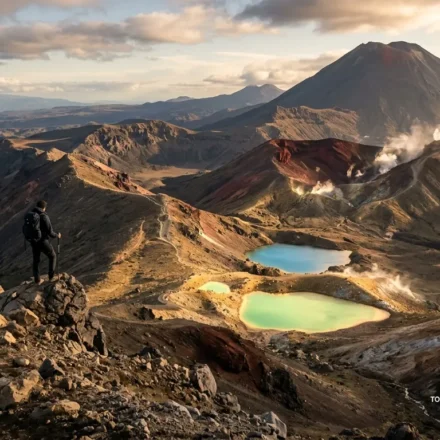
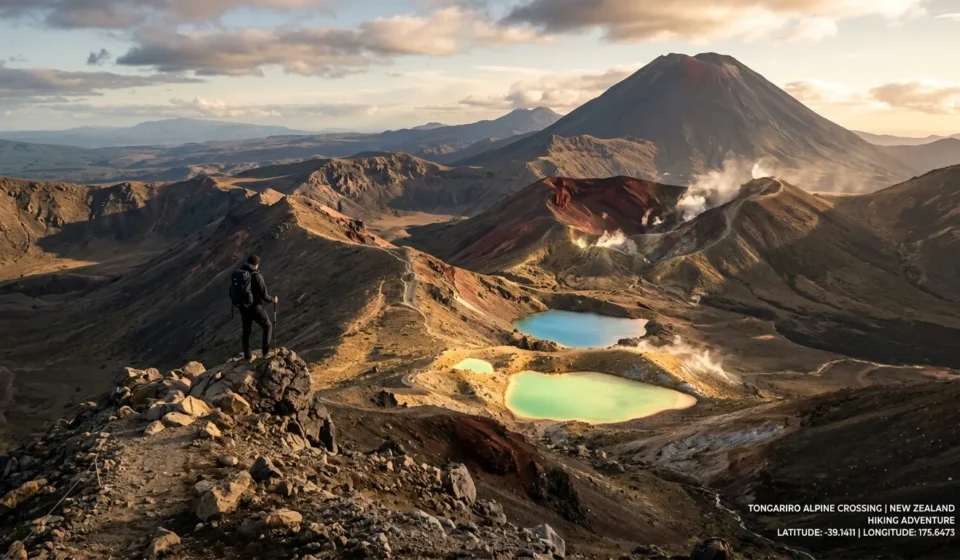
Switching gears entirely, the Tongariro Northern Circuit on the North Island offers a stark, dramatic landscape unlike any other. This 43-kilometer loop encircles the active volcanoes of Tongariro and Ngauruhoe, taking you through an otherworldly landscape of craters, emerald lakes, and alpine tussock fields. Fans of “Lord of the Rings” will recognize Mount Ngauruhoe as Mount Doom!
Why choose it? If you’re fascinated by geology, unique ecosystems, and a challenging hike that feels like walking on another planet, this is it. The views from Red Crater and down to the vibrant Emerald Lakes are absolutely unforgettable. But what would you do in this situation if the weather turned? Preparedness is key, as conditions can be extreme here.
Practicalities for the Tongariro Northern Circuit
- Duration: 3-4 days / 2-3 nights.
- Difficulty: Moderate to Hard. Involves steep climbs, traverses over scree slopes, and exposure to the elements. Good fitness is required.
- Budget: Moderate. Hut fees are standard Great Walk rates (NZD $40-70). Shuttles to the track start from National Park Village or Taupō cost around NZD $35-50 return.
- Best Time to Visit: December to April. Outside these months, expect snow and ice, requiring specialist equipment and experience.
- Transportation: Most hikers use shuttle services from nearby towns like National Park Village, Whakapapa Village, or Taupō to access the start/end points. The track is a circuit, so transport is generally easier to arrange.
- Accommodation Example: Stay at a motel in National Park Village (e.g., Plateau Lodge for NZD $120/night) or a hostel (e.g., National Park Backpackers for NZD $30/night) before and after your hike.
- Safety: This is an active volcanic area; always check volcanic activity alerts before you go. Weather can change rapidly and severely. Carry a warm hat, gloves, and waterproof layers even in summer.
Choosing Your New Zealand Hiking Adventure
So, which Great Walk is calling your name? The choice ultimately comes down to your personal preferences, fitness level, available time, and budget. If you dream of golden beaches and gentle coastal paths, the Abel Tasman Coast Track is your haven. For the ultimate Fiordland immersion and bragging rights, tackle the iconic Milford Track, but be prepared for intense planning and a higher cost. If you want a taste of alpine grandeur in Fiordland without the Milford’s logistical hurdles, the Routeburn Track delivers spectacular scenery. And for a truly unique, otherworldly experience traversing volcanic landscapes, the Tongariro Northern Circuit is an unparalleled adventure.
No matter which trail you choose, remember that New Zealand’s natural beauty is a precious gift. Travel responsibly, respect the local Māori culture, and always adhere to DOC guidelines to ensure these incredible places remain pristine for generations to come. Your epic New Zealand hiking adventure awaits – which path will you choose to wander?
Frequently Asked Questions
What are the Great Walks in New Zealand?
The Great Walks in New Zealand are a network of premier multi-day trails that showcase the country's most spectacular scenery. These trails are meticulously maintained, well-signposted routes that vary in terms of difficulty, duration, cost, and the type of experience they offer. The Department of Conservation (DOC) manages these bookings, and fees contribute to the upkeep of these incredible natural assets.
How do I plan my Great Walk adventure in New Zealand?
To plan your Great Walk adventure in New Zealand, it's essential to understand the fundamental aspects of hiking these trails. This includes booking huts and campsites well in advance, preparing for all weather conditions, and committing to Leave No Trace principles. The best time to tackle most of the Great Walks is typically from late October to April, coinciding with New Zealand's spring, summer, and early autumn.
What is the cost of hiking the Great Walks in New Zealand?
The cost of hiking the Great Walks in New Zealand can range from affordable to quite expensive, depending on your choices. Hut fees for independent Great Walks generally sit around NZD $40-70 per person per night, while campsites are cheaper (NZD $15-25). Transport costs, such as shuttles, ferries, and sometimes flights, can easily add another NZD $100-300+ per person. A realistic daily budget, including hut fees and transport, for an independent hiker might be around NZD $100-150 per day.
What is the Abel Tasman Coast Track like?
The Abel Tasman Coast Track is a 60-kilometer trail located at the top of the South Island, offering a refreshingly different Great Walk experience. This track is renowned for its accessibility and flexibility, allowing hikers to hike the entire length, take a water taxi to skip sections, or even combine hiking with kayaking. The track features golden sand beaches, turquoise waters, and the chance to spot marine life, making it perfect for those who want a blend of activity and relaxation.
When is the best time to hike the Great Walks in New Zealand?
The best time to hike the Great Walks in New Zealand is typically from late October to April, coinciding with New Zealand's spring, summer, and early autumn. This period offers the most stable weather, longer daylight hours, and full operational services, such as ferries and shuttles. However, shoulder season (late spring/early autumn) can offer a fantastic alternative to the busy summer months, with fewer crowds and slightly lower prices for transport, although the weather can be more unpredictable.