





Uncovering Central America’s Wild Heart, Responsibly
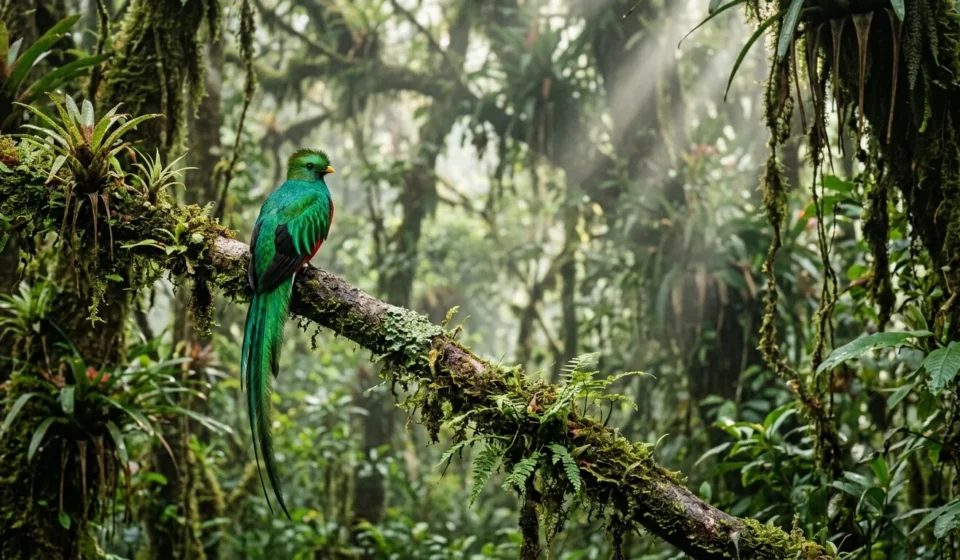
Forget the traditional African safari for a moment. While the idea of tracking the “Big Five” is thrilling, what if I told you there’s an equally captivating, profoundly intimate, and often more accessible world of wildlife waiting to be discovered – one where your presence actively supports conservation rather than strains it? I’m talking about the dense, vibrant rainforests of Central America, a region teeming with incredible biodiversity, from sloths and monkeys to jaguars and resplendent quetzals. As a seasoned traveler who’s spent over a decade scrambling through these jungles, I’ve seen firsthand the magic of an ethical wildlife encounter.
Table Of Content
- Uncovering Central America’s Wild Heart, Responsibly
- Why Central America for Ethical Wildlife Encounters?
- Choosing Your Rainforest Destination: Beyond the Usual Suspects
- Costa Rica: The Pioneer of Eco-Tourism
- Belize: Jungle & Reef Harmony
- Panama: The Crossroads of Biodiversity
- Planning Your Ethical Encounter: Practicalities & Principles
- Finding the Right Operators
- Realistic Daily Budgets (USD)
- Recommended Stay Durations & Packing Essentials
- My Top Tips for Responsible Wildlife Observation
- Your Ethical Adventure Awaits
- Frequently Asked Questions
- What makes Central America a prime location for ethical wildlife encounters?
- What is an ethical wildlife encounter, and why is it important?
- What are some alternative destinations in Central America for ethical wildlife encounters beyond Costa Rica?
- How can I choose a responsible tour operator for my wildlife encounter in Central America?
- What is the best time to visit Central America for wildlife viewing, and what are the benefits of visiting during the shoulder season?
Many travelers dream of seeing exotic animals, but the “how” is just as important as the “what.” In this guide, we’re diving deep into how you, too, can experience Central America’s incredible rainforest wildlife in a way that’s respectful, sustainable, and unforgettable. We’ll skip the tourist traps and instead focus on genuine, sustainable travel that leaves a positive impact. Ready to trade your binoculars for a truly wild adventure?
Why Central America for Ethical Wildlife Encounters?
Central America, a narrow land bridge connecting two continents, is a biological hotspot. Its compact size means you can traverse vast ecosystems in a relatively short time, from Pacific beaches to Caribbean coastlines and, most importantly for our topic, incredibly diverse rainforests. Unlike the more commercialized wildlife tourism found elsewhere, many Central American nations have embraced eco-tourism as a core part of their national identity, fostering a strong network of protected areas and community-led conservation projects.
What exactly do I mean by an ethical wildlife encounter? Simply put, it’s about observing animals in their natural habitat without disturbing them, supporting local communities and conservation efforts, and minimizing your environmental footprint. This means no feeding, no touching, no taking selfies with wild animals, and choosing operators who prioritize animal welfare above all else. It’s about quiet observation, respectful distance, and letting the wild remain wild. Honestly, witnessing a wild animal thrive in its natural environment is far more rewarding than any staged interaction.
Choosing Your Rainforest Destination: Beyond the Usual Suspects
While Costa Rica often hogs the spotlight for its eco-tourism, several other Central American gems offer equally spectacular and often less crowded opportunities for ethical wildlife encounters. Based on my experience, here are a few standouts:
Costa Rica: The Pioneer of Eco-Tourism
Costa Rica is undeniably a leader, and for good reason. It boasts an incredible network of national parks and private reserves. The best time to visit for wildlife viewing is generally the dry season, from December to April, when trails are clearer and animals congregate around water sources. However, the “shoulder season” (May-June and November) offers fewer crowds, lush scenery, and often better prices, even if you might encounter a few afternoon showers. “Shoulder season” refers to the travel periods just before or after the peak season, offering a balance of good weather and fewer tourists.
- Recommended Destination: The Osa Peninsula, specifically Corcovado National Park. This remote gem is often called “the most biologically intense place on Earth.” You’ll need a certified guide and permits to enter.
- Accommodation Example: Stay at a rustic, locally-owned eco-lodge on the edge of the park, like Luna Lodge or a simpler guesthouse in Drake Bay, which can run you around $80-150/night for a mid-range option with meals.
- Budget: Expect to pay $150-250 per day for a mid-range experience, including accommodation, food, and guided tours.
- Transportation: Internal flights (Sansa or Aerobell) to Drake Bay or Puerto Jiménez, then a boat taxi.
Belize: Jungle & Reef Harmony
Belize offers a unique blend of rainforest and Caribbean reef, making it a fantastic two-in-one destination. The best time to visit is during its dry season, from November to May. Belize is a fantastic option for travelers interested in a slightly more rugged, off-the-beaten-path experience than Costa Rica.
- Recommended Destination: Cockscomb Basin Wildlife Sanctuary, the world’s only jaguar preserve. While spotting a jaguar is incredibly rare, you’ll see tracks, tapirs, peccaries, monkeys, and incredible birdlife. The Jaguar Trail, easily accessible from the visitor center, is a 3-mile round trip that often reveals signs of elusive big cats.
- Accommodation Example: Basic cabins are available right inside the sanctuary for about $25-40/night, or you can find guesthouses in nearby Placencia or Hopkins for $60-100/night.
- Budget: A more budget-friendly option, expect $80-150 per day.
- Transportation: “Chicken buses” (local public buses) are a common, affordable, and authentic way to travel. From Placencia, a local bus to Maya Centre (the sanctuary’s entrance) costs around $5.
Panama: The Crossroads of Biodiversity
Often overlooked, Panama offers fantastic rainforest experiences, especially near its famous canal. The best time to visit is during the dry season, from December to April.
- Recommended Destination: Soberanía National Park, just a stone’s throw from Panama City. It’s incredibly accessible and boasts a high concentration of bird species, monkeys, sloths, and even crocodiles along the Chagres River. The famous Pipeline Road here is a birder’s paradise.
- Accommodation Example: Options range from hotels in Gamboa (Gamboa Rainforest Reserve) for $100-200/night to more budget-friendly guesthouses in nearby towns for $40-70/night.
- Budget: Similar to Costa Rica, around $120-200 per day.
- Transportation: Public buses or taxis from Panama City to Gamboa or the park entrance are easy and affordable ($2-10).
Planning Your Ethical Encounter: Practicalities & Principles
So far we’ve covered some fantastic destinations. Now, let’s get to the really critical point: how to plan your trip to ensure it’s truly ethical and impactful.
Finding the Right Operators
This is paramount. Look for tour companies that are locally owned and operated, employ local guides, advertise small group sizes, and explicitly state their commitment to conservation and no-touch policies. Avoid any operator that promises guaranteed sightings or allows interaction with wild animals. Always ask about their environmental certifications or partnerships with conservation groups. For example, imagine a situation where you’re offered a “monkey feeding” tour. Your immediate red flag should go up. This disrupts natural foraging behaviors and can make animals dependent on humans, leading to aggression or disease.
Realistic Daily Budgets (USD)
- Accommodation: $20-50 for a clean, basic guesthouse or hostel; $70-150 for a mid-range eco-lodge.
- Food: $15-30/day if you stick to local “sodas” (Costa Rica), “comedores” (Belize/Panama), or street food. Expect $40-60/day for tourist-oriented restaurants.
- Activities: Guided rainforest tours typically cost $50-150 per person per day, depending on the length and exclusivity. Park entrance fees are usually $10-20.
- Transportation: Local buses are incredibly cheap ($2-15 for inter-city), while shared shuttles can be $30-70 per ride.
- Overall Daily Budget: A comfortable budget traveler can expect to spend $60-100/day, while a mid-range traveler might budget $150-250/day.
Recommended Stay Durations & Packing Essentials
I usually recommend spending a minimum of 3-5 full days in each rainforest region you choose. This allows for early morning and night walks, giving you the best chance to see different species, and also accounts for potential rainy days. For packing, think lightweight, quick-dry clothes (long sleeves and pants for insect protection), sturdy, waterproof hiking shoes, a good insect repellent (DEET or picaridin is a must), a lightweight rain jacket, binoculars (non-negotiable for wildlife!), a headlamp for night walks, and a camera with a decent zoom lens. And don’t forget a reusable water bottle!
Safety practices in the rainforest mean always hiring a local guide, staying on marked trails, informing someone of your plans, and being aware of your surroundings. Learning a few basic Spanish phrases will go a long way in connecting with locals and showing cultural respect. When I was overlanding through Honduras, knowing even simple greetings opened doors to incredible local experiences. “Overlanding,” by the way, is self-reliant adventure travel to remote destinations where the journey itself is the primary goal, often involving modified vehicles and extended periods on the road.
My Top Tips for Responsible Wildlife Observation
From countless hours spent quietly observing, I’ve learned that the most profound wildlife moments happen when you least expect them and when you’re truly present. I remember one morning in a tiny guesthouse just outside Tortuguero, Costa Rica (GPS: 10.3550 N, 83.5042 W, the area around the main village). I woke up to the sound of rustling outside my window. Peeking out, I saw a family of capuchin monkeys, completely unaware of me, foraging for fruit. It wasn’t a guided tour; it was a pure, unadulterated moment of connection with the wild. That’s the magic you’re seeking.
- Maintain Distance: Always keep a respectful distance from animals. If an animal changes its behavior because of your presence, you’re too close. Use your binoculars or zoom lens instead of getting nearer.
- Never Feed or Touch: This is non-negotiable. Feeding animals disrupts their natural diet, can make them dependent on humans, and can lead to aggressive behavior or disease transmission.
- Be Quiet and Patient: The rainforest rewards patience. Move slowly, speak in hushed tones, and listen. Often, you’ll hear animals before you see them.
- Leave No Trace: Pack out everything you pack in. Stick to designated trails. Your goal is to leave the environment exactly as you found it, or better.
- Support Local: Hire local guides, stay in locally-owned guesthouses, and eat at local restaurants. Your money directly benefits the communities that live alongside and protect these precious ecosystems.
Remember, the goal isn’t just to “see” an animal, but to understand its habitat, its role in the ecosystem, and how we can protect it. By choosing ethical operators and following these guidelines, you become part of the solution, helping to preserve these incredible rainforests for generations to come.
Your Ethical Adventure Awaits
Venturing into Central America’s rainforests for ethical wildlife encounters is more than just a trip; it’s an education, an adventure, and a profound connection with the natural world. It’s about understanding that the true “Big Five” of the jungle are not just the animals themselves, but the principles of respect, sustainability, conservation, local empowerment, and the quiet awe that such places inspire. So, pack your binoculars, choose your destination wisely, and prepare to be enchanted by the unparalleled biodiversity and vibrant life that thrives in Central America’s green heart. Your next great ethical adventure is calling – will you answer?
Frequently Asked Questions
What makes Central America a prime location for ethical wildlife encounters?
Central America is a biological hotspot with a compact size, allowing for easy traversal of vast ecosystems, including diverse rainforests. Many Central American nations have embraced eco-tourism, fostering a strong network of protected areas and community-led conservation projects, making it ideal for responsible wildlife tourism.
What is an ethical wildlife encounter, and why is it important?
An ethical wildlife encounter involves observing animals in their natural habitat without disturbing them, supporting local communities and conservation efforts, and minimizing environmental footprint. This approach ensures that wildlife is respected and protected, and that tourism supports conservation rather than harming it.
What are some alternative destinations in Central America for ethical wildlife encounters beyond Costa Rica?
While Costa Rica is a pioneer in eco-tourism, other Central American countries like Belize offer unique opportunities for ethical wildlife encounters. Belize, for example, provides a blend of jungle and reef experiences, with a strong focus on conservation and community-led tourism.
How can I choose a responsible tour operator for my wildlife encounter in Central America?
To choose a responsible tour operator, look for operators that prioritize animal welfare, support local communities, and minimize environmental impact. Ensure that the operator is certified and has a strong reputation for responsible tourism practices, and that they provide clear guidelines for ethical wildlife viewing.
What is the best time to visit Central America for wildlife viewing, and what are the benefits of visiting during the shoulder season?
The best time for wildlife viewing in Central America is generally the dry season, from December to April. However, visiting during the shoulder season (May-June and November) offers fewer crowds, lush scenery, and often better prices, making it an attractive option for those who want to avoid peak season crowds and support local conservation efforts.