



Unleash Your Inner Explorer: Your Ultimate Patagonia Hiking Guide
Ah, Patagonia. Just the name conjures images of jagged granite peaks, colossal glaciers, and windswept pampas stretching to the ends of the earth. As a seasoned wanderer who’s spent over 15 years chasing horizons, I can tell you firsthand: Patagonia isn’t just a destination; it’s a pilgrimage for the adventurous soul. If you’re dreaming of strapping on your boots and tackling some of the world’s most iconic trails, you’ve come to the right place. This guide will cut through the noise, giving you the real, actionable advice you need to conquer Torres del Paine, marvel at Perito Moreno, and discover the lesser-known wonders that make Patagonia truly unforgettable.
Table Of Content
- Unleash Your Inner Explorer: Your Ultimate Patagonia Hiking Guide
- When to Go: Timing Your Patagonian Adventure
- The Iconic & The Unmissable: Torres del Paine & Perito Moreno
- Torres del Paine National Park, Chile: A Hiker’s Paradise
- Perito Moreno Glacier, Argentina: A Living Ice Giant
- Beyond the Beaten Path: El Chaltén & More
- Essential Patagonia Travel Tips
- Ready to Wander?
- Related Reading
When to Go: Timing Your Patagonian Adventure
Choosing the right time can make or break your trip. Patagonia’s weather is famously unpredictable, but there are definitely sweet spots:
- Peak Season (December to February): This is summer in the Southern Hemisphere, offering the warmest temperatures (averaging 50-65°F / 10-18°C) and longest daylight hours. Expect full trails, booked-out accommodations, and higher prices. If you’re planning a multi-day trek like the Torres del Paine W-trek, book everything months in advance!
- Shoulder Season (October-November & March-April): This is my personal favorite. Shoulder season refers to the periods just before or after the peak tourist season, offering milder weather, fewer crowds, and often lower prices. You’ll find slightly lower prices, and still decent weather (though it can be colder and windier, especially in October/April). March, in particular, often offers stunning autumn colors and crisp air – perfect for photography.
- Off-Season (May to September): Winter brings snow, freezing temperatures, and many services closing down. Unless you’re an experienced winter mountaineer, it’s generally not recommended for casual hiking.
The Iconic & The Unmissable: Torres del Paine & Perito Moreno
Torres del Paine National Park, Chile: A Hiker’s Paradise
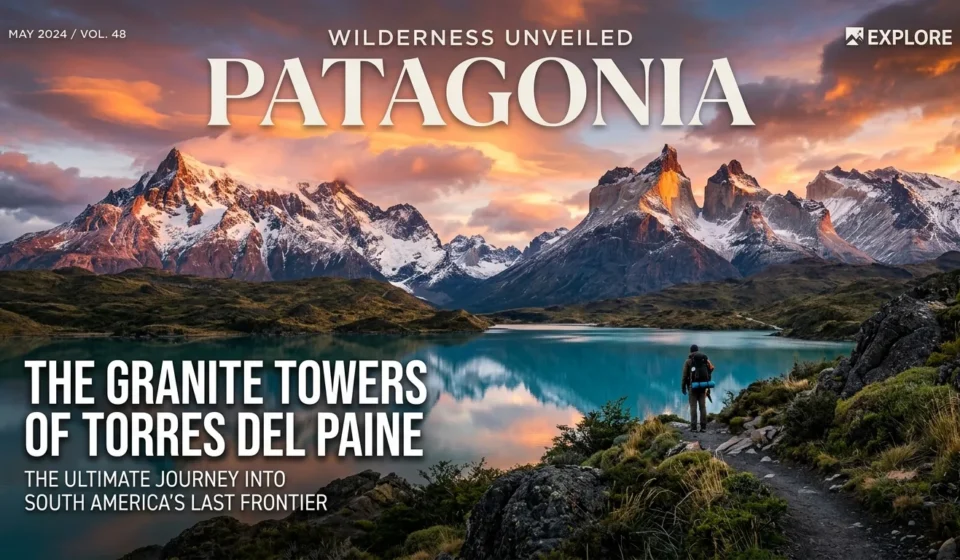
The crown jewel of Chilean Patagonia, Torres del Paine is legendary for its dramatic granite spires, turquoise lakes, and unique wildlife. It’s where many come to test their mettle.
- Recommended Stay:
- W-Trek: 4-5 days. This classic route covers the park’s main highlights: the Base of the Towers, the French Valley, and Grey Glacier.
- O-Circuit: 8-10 days. A full loop that includes the W-Trek and takes you through the park’s wilder, less-trafficked backside.
- Realistic Daily Budget (mid-range): Expect $100-200+ USD per person per day. This accounts for park entrance fees (~$40 USD), refugios (mountain huts offering basic dormitory accommodation, meals, and sometimes camping facilities – often $80-150+ USD/night for a bed and food), or campsites ($30-50 USD/night), and transport.
- Getting There: Fly into Punta Arenas (PUQ) or Puerto Natales (PNT) in Chile. From Puerto Natales, regular buses run to the park entrance (Laguna Amarga or Pudeto) for about $10-15 USD one-way.
- Actionable Tip: You MUST book all your campsites or refugio beds months in advance, especially for peak season. The park has strict capacity limits. Don’t show up without reservations!
- Beyond the W: While popular, consider exploring less-trafficked trails around Lago Sarmiento for unique wildlife viewing, or simply taking a catamaran across Lago Pehoé for different perspectives of the Cuernos.
Perito Moreno Glacier, Argentina: A Living Ice Giant
While not a traditional hiking destination, the Perito Moreno Glacier near El Calafate is an absolute must-see. Its colossal blue-white face calves (breaks off) massive ice chunks with thunderous roars, creating an unforgettable spectacle.
- Recommended Stay: A full day trip from El Calafate.
- Realistic Daily Budget: Around $150-250 USD, mostly due to the park entrance fee (~$30 USD) and optional activities like the mini-trekking (a guided short glacier hike with crampons) tour, which can run $100-200+ USD.
- Getting There: Fly into El Calafate (FTE) in Argentina. Buses depart regularly from El Calafate bus terminal to the glacier walkways (~$20-30 USD return).
- Actionable Tip: Book your mini-trekking tour in advance, especially during peak season. Walking the extensive network of boardwalks offers incredible views and photo opportunities without a tour.
Beyond the Beaten Path: El Chaltén & More
If Torres del Paine is the queen, El Chaltén is the rugged, laid-back king of Patagonian hiking. Known as Argentina’s “Trekking Capital,” it offers world-class, free day hikes and a vibrant outdoor culture.
- Recommended Stay: 3-5 days to explore multiple trails without feeling rushed.
- Realistic Daily Budget: More budget-friendly than Torres del Paine, averaging $70-120 USD/day for a hostel/guesthouse, food, and local transport. The trails themselves are free! You can find a comfortable hostel bed for $25-40/night or a family-run guesthouse for $60-90/night.
- Getting There: Fly into El Calafate (FTE), then take a comfortable 3-hour bus ride to El Chaltén (~$25-35 USD one-way).
- Must-Do Hikes:
- Fitz Roy Trail (Laguna de los Tres): A challenging full-day hike (8-10 hours return) to the iconic base of Mount Fitz Roy. The sunrise view here is legendary but requires an early start or camping. (GPS: -49.2764, -72.9348 for the viewpoint)
- Cerro Torre Trail (Laguna Torre): A slightly less strenuous but equally stunning full-day hike (7-9 hours return) to the glacial lake at the base of Cerro Torre.
- Hidden Gem: While not truly “hidden,” for an incredible and less crowded view, consider hiking to Mirador Maestri from the Cerro Torre trail. It offers a different perspective of Glacier Grande and Cerro Torre, often with fewer people than Laguna Torre.
Essential Patagonia Travel Tips
- Pack Layers: Patagonia’s weather can change in minutes. Think waterproof and windproof outer shells, fleece mid-layers, and moisture-wicking base layers.
- Footwear: Sturdy, waterproof hiking boots are non-negotiable.
- Connectivity: WiFi can be spotty and expensive. Download offline maps and essential information before you go.
- Safety First: Inform your accommodation of your hiking plans, carry a first-aid kit, and always respect the power of nature. Strong winds are common; learn how to brace yourself.
- Sustainable Travel: Patagonia is a fragile ecosystem. Practice Leave No Trace principles: pack out everything you pack in, stay on marked trails, and never disturb wildlife. Support local businesses and respect indigenous cultures.
Ready to Wander?
Patagonia is a land of raw beauty and unparalleled adventure. It demands respect, preparation, and a healthy dose of wanderlust. Whether you’re aiming for the grandeur of Torres del Paine, the majesty of Perito Moreno, or the quiet trails of El Chaltén, this region will leave an indelible mark on your soul. As your trusted travel buddy at Destination Wanderer, I urge you to experience this incredible corner of the world. So, grab your gear, book those flights, and get ready to experience a journey that will redefine your idea of exploration. Happy trails, fellow wanderer!