



Few places on Earth offer the raw, ethereal beauty of Iceland in winter. Forget the crowds and embrace a landscape transformed into a wonderland of ice, fire, and dancing lights. As a seasoned explorer who has braved Iceland’s winter winds and been utterly captivated by its magic, I’m here to tell you that a winter road trip isn’t just possible, it’s an absolute dream. This guide from Destination Wanderer will help you plan an unforgettable journey, from chasing the Aurora Borealis to soaking in geothermal hot springs and marveling at ancient glaciers.
Table Of Content
- When to Embrace Iceland’s Winter Charm
- Why a Winter Road Trip is the Way to Go
- Essential Planning: Your Winter Road Trip Checklist
- Vehicle Choice is Paramount
- Budgeting for Your Icelandic Adventure
- Packing Like a Pro: Layers, Layers, Layers!
- Unmissable Experiences: Northern Lights, Hot Springs & Glaciers
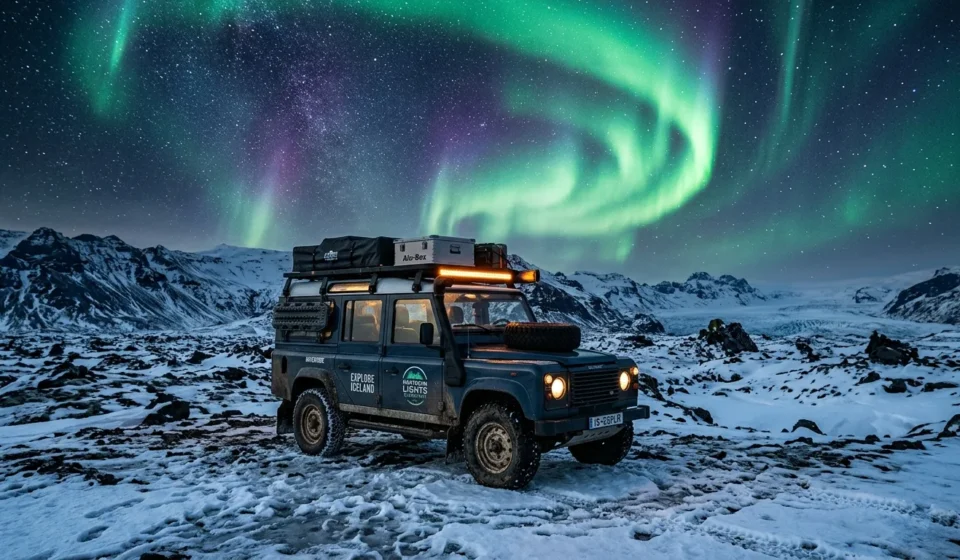
- Chasing the Aurora Borealis
- Soaking in Geothermal Hot Springs
- Marveling at Glaciers and Ice Caves
- Safety & Sustainable Travel in Iceland
- Related Reading
When to Embrace Iceland’s Winter Charm
The sweet spot for a true Icelandic winter experience, complete with Northern Lights and snow-dusted landscapes, is typically from October to March. I personally love the shoulder months of October/November or March. While still cold, you might encounter slightly fewer extreme weather conditions than the deep winter months of December-February, and daylight hours are lengthening in March, giving you more time for exploration. Expect average temperatures to hover around 0°C (32°F), often dipping below freezing, with strong winds and unpredictable weather. Be prepared for anything from blizzards to clear, crisp skies!
Why a Winter Road Trip is the Way to Go
While organized tours have their place, a road trip offers unparalleled freedom. You can chase the Northern Lights away from light pollution, linger longer at a stunning waterfall, or spontaneously pull over to photograph a herd of Icelandic horses. It’s an adventure on your own terms.
Essential Planning: Your Winter Road Trip Checklist
Vehicle Choice is Paramount
This isn’t the time for a compact car. A 4×4 vehicle with studded winter tires is non-negotiable. Road conditions can change rapidly, with ice, snow, and strong winds creating challenging drives. Rent from a reputable company and ensure you have comprehensive insurance, including gravel protection. Expect to pay anywhere from $70-$150+ per day for a suitable 4×4, depending on the season and model.
Budgeting for Your Icelandic Adventure
Iceland isn’t known for being cheap, but smart planning helps. For a comfortable, mid-range winter road trip, budget around $150-$250 per person per day. This typically covers:
- Accommodation: $80-$150/night for a double room in guesthouses or farm stays. For example, a cozy family-run guesthouse like the Hotel Rangá (a bit higher end for aurora viewing) or a simpler farm stay near Vík can range from $120-$200+.
- Food: $50-$80/day. Self-catering for breakfast and some lunches from local supermarkets (Bónus or Krónan) will save you a lot. Dinner at restaurants can be $30-$50 per person.
- Transport: Car rental, fuel (gas is expensive, around $2.50/liter), and potential parking/tunnel fees: $40-$80/day per person (assuming 2-3 people sharing car costs).
- Activities: $30-$70/day. This includes hot spring entry fees (e.g., Secret Lagoon ~$25, Blue Lagoon ~$90+), glacier tours ($100-$150 for a guided walk), or ice cave tours ($150-$250).
Recommended Stay Duration: For a solid taste of Iceland’s highlights without rushing, aim for 7-10 days. This allows for buffer days in case of bad weather.
Packing Like a Pro: Layers, Layers, Layers!
This is my golden rule for Iceland in winter. Think like an onion! You’ll need:
- Thermal base layers: Merino wool is excellent.
- Mid-layers: Fleece or down jacket.
- Outer shell: Waterproof and windproof jacket and pants.
- Warm hat, gloves, and scarf: Essential!
- Waterproof hiking boots: Sturdy, insulated, and ankle-supporting.
- Wool socks: Multiple pairs.
- Swimsuit and quick-dry towel: For those hot springs!
- Spikes/crampons for shoes: Invaluable for icy paths around waterfalls.
- Camera gear: Tripod for Northern Lights, extra batteries (cold drains them quickly).
Unmissable Experiences: Northern Lights, Hot Springs & Glaciers
Chasing the Aurora Borealis
The Northern Lights are a fickle dance of nature. To maximize your chances:
- Check the forecast: Use aurora forecast apps (e.g., vedur.is) for cloud cover and Kp-index.
- Get away from light pollution: Drive outside Reykjavik. The Golden Circle or South Coast are great areas.
- Patience is key: Find a dark spot, turn off your car lights, and wait.
- Hidden Gem: Consider staying at a guesthouse slightly off the main road in the countryside, like a farm stay near Hella. Many offer wake-up calls if the lights appear!
Soaking in Geothermal Hot Springs
What better way to thaw out after a day of exploring? Beyond the famous Blue Lagoon, consider these local favorites:
- The Secret Lagoon (Gamla Laugin) in Flúðir: A more authentic, less crowded experience near the Golden Circle. Entrance around $25-$30.
- Laugarvatn Fontana: Combines geothermal baths with a unique rye bread baking experience in hot ground.
- Reykjadalur Hot Spring Thermal River: A moderate 3km hike brings you to a natural hot river you can bathe in for free (GPS: 64.0267° N, 21.2227° W). A true hidden gem!
Marveling at Glaciers and Ice Caves
Iceland is home to Europe’s largest glacier, Vatnajökull. Don’t miss:
- Jökulsárlón Glacier Lagoon & Diamond Beach: Witness icebergs calve from the glacier and wash up like diamonds on a black sand beach.
- Glacier Walking: Book a guided tour on Sólheimajökull glacier (a tongue of Mýrdalsjökull) or Vatnajökull. These are essential for safety and equipment. A 3-hour walk typically costs $100-$150.
- Ice Caves: Only accessible with a guide, usually from November to March, weather permitting. Crystal Caves are stunning but require booking well in advance.
Safety & Sustainable Travel in Iceland
Iceland’s beauty demands respect and caution, especially in winter.
- Drive Safely: Always check road.is for road conditions and closures before setting out. Be aware of the “one-lane bridges” and yield to oncoming traffic. Stick to paved roads; F-roads (mountain roads) are generally closed in winter and require highly specialized vehicles.
- Weather Alerts: Heed all weather warnings from vedur.is. Weather can change in minutes.
- Cultural Etiquette: Respect local customs. Don’t walk on private property without permission. Always remove your shoes when entering someone’s home.
- Sustainable Practices:
- Stay on marked paths: Iceland’s delicate moss and volcanic landscapes are easily damaged.
- Leave No Trace: Pack out everything you pack in. Dispose of waste properly.
- Conserve Resources: Be mindful of water and electricity usage, even in hotels.
- Support Local: Choose local guesthouses, buy Icelandic crafts, and eat at local restaurants.
An Iceland winter road trip is an adventure of a lifetime. It’s challenging, unpredictable, and utterly breathtaking. With the right preparation and a spirit of adventure, you’ll return with memories of landscapes that feel otherworldly and the magic of the Northern Lights dancing just for you. Happy wandering, and remember to share your tales with Destination Wanderer!