




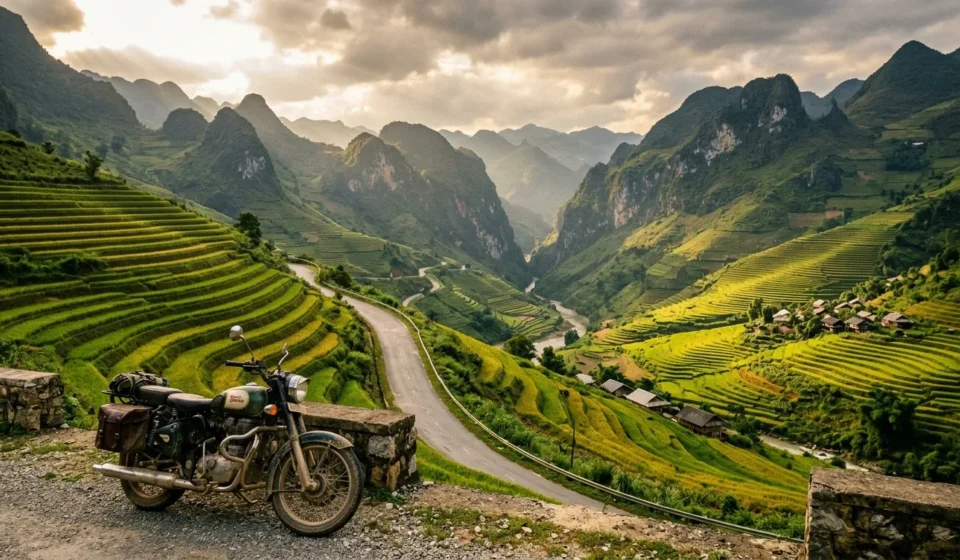

Hey there, fellow wanderer! Ready to dive headfirst into one of Southeast Asia’s most captivating countries? Vietnam is a vibrant tapestry of ancient history, breathtaking landscapes, bustling cities, and mouth-watering cuisine. As someone who’s spent countless weeks navigating its nooks and crannies, I can tell you that three weeks is the sweet spot to truly experience its diverse offerings without feeling rushed or like you’re just skimming the surface.
Table Of Content
- Why 3 Weeks is Perfect for Vietnam
- Best Time to Visit Vietnam
- Realistic Daily Budget for Backpacking Vietnam
- Getting Around Vietnam: Transportation Tips
- Your Perfect 3-Week Vietnam Backpacking Itinerary
- Week 1: Northern Wonders (Hanoi, Ha Long Bay, Ninh Binh)
- Week 2: Central Charms (Hue, Da Nang, Hoi An)
- Week 3: Southern Vibrancy (Ho Chi Minh City, Mekong Delta)
- Practical Pointers for Your Vietnam Adventure
This isn’t just another generic “top 10” list. This is your actionable, no-nonsense guide to backpacking Vietnam in three weeks, packed with the kind of insider tips I’d share with my closest travel buddies. Let’s get you ready for an unforgettable adventure!
Why 3 Weeks is Perfect for Vietnam
Vietnam is long, stretching over 1,600 kilometers from north to south. A 3-week itinerary allows you to hit the major highlights in each region – the historic North, the charming Central coast, and the vibrant South – while still having time to soak it all in. You’ll avoid the dreaded “flashpacking” feeling and get a real taste of local life, from street food stalls to serene rice paddies.
Best Time to Visit Vietnam
Given Vietnam’s length, its climate varies significantly by region. There isn’t one perfect time for the entire country, but here’s a breakdown:
- Northern Vietnam (Hanoi, Ha Long Bay, Sapa, Ninh Binh): October to April offers cooler, drier weather, ideal for trekking and city exploration. December to February can be quite chilly, especially in the mountains.
- Central Vietnam (Hue, Da Nang, Hoi An): February to August is the dry season with sunny skies. September to January can see heavy rains and typhoons.
- Southern Vietnam (Ho Chi Minh City, Mekong Delta): December to April is dry and hot. May to November is the rainy season, with short, heavy downpours usually in the afternoon.
For a 3-week trip covering all regions, February to April or September to November (known as shoulder season, the periods between peak and off-peak travel) generally offer the best compromise, though you might encounter some rain in the south during the latter period.
Realistic Daily Budget for Backpacking Vietnam
Vietnam is incredibly budget-friendly! Here’s what you can expect:
- Budget Traveler ($30-50 USD/day): Dorm beds or basic private rooms, street food, local buses/trains, free activities.
- Mid-Range Traveler ($50-80 USD/day): Comfortable private rooms (e.g., family-run guesthouses), a mix of street food and sit-down restaurants, occasional taxis/flights, paid tours/attractions.
This budget excludes international flights but covers accommodation, food, local transport, and activities. Expect to pay a bit more for a Ha Long Bay cruise (which often includes food and accommodation).
Getting Around Vietnam: Transportation Tips
- Overnight Buses (“Sleeping Buses”): The most common and cost-effective way to cover long distances. Expect to pay $10-20 USD for a journey like Hanoi to Ninh Binh or Hue to Hoi An.
- Trains: The “Reunification Express” runs the length of the country. A more comfortable (and scenic) option than buses, especially for longer hauls. Expect $20-60 USD for a sleeper berth.
- Internal Flights: For quickly covering vast distances (e.g., Da Nang to Ho Chi Minh City). Airlines like Vietjet Air, Bamboo Airways, and Vietnam Airlines offer competitive prices, often $30-80 USD if booked in advance.
- Motorbikes/Scooters: Fantastic for local exploration. Renting for a day typically costs $5-10 USD. Be very cautious, ensure you have appropriate insurance, and wear a helmet!
Your Perfect 3-Week Vietnam Backpacking Itinerary
Week 1: Northern Wonders (Hanoi, Ha Long Bay, Ninh Binh)
- Days 1-3: Hanoi
- Arrive at Noi Bai International Airport (HAN). Grab a taxi (around $15-20) or a Grab car to your accommodation in the Old Quarter.
- Dive into the Old Quarter’s chaotic charm: wander the narrow streets, try Bún Chả (grilled pork with noodles) at a local spot, and explore Hoan Kiem Lake and the Temple of the Jade Mountain.
- Visit the Temple of Literature, Vietnam’s first national university. Catch a traditional Water Puppet Show.
- Accommodation Example: Hanoi Old Quarter Homestay or Little Charm Hanoi Hostel for around $15-25/night (private room).
- Days 4-6: Ha Long Bay (or Lan Ha Bay)
- Book a 2-day/1-night cruise. While Ha Long Bay is famous, consider Lan Ha Bay (accessed from Cat Ba Island) for fewer crowds and a more serene experience. Prices range from $100-250 USD depending on the boat and amenities, including transfers from Hanoi, meals, kayaking, and accommodation onboard.
- Enjoy kayaking through limestone karsts, swimming, and exploring caves.
- Days 7-9: Ninh Binh
- Return to Hanoi, then take a 2.5-hour bus or train to Ninh Binh (around $7-10). Stay in the Tam Coc area.
- Explore Trang An Grottoes or Tam Coc by traditional sampan boat. This region is often called “Halong Bay on land” due to its stunning karst landscapes.
- Hike up to the Mua Cave viewpoint (GPS: 20.2474° N, 105.9400° E) for panoramic views of the rice paddies and Ngo Dong River.
- Hidden Gem: Rent a bicycle and cycle through the rice fields to Bich Dong Pagoda for a tranquil, less crowded experience.
Week 2: Central Charms (Hue, Da Nang, Hoi An)
- Day 10: Travel to Hue
- Take an overnight sleeping train from Ninh Binh to Hue (approx. 10-12 hours, $25-40).
- Days 11-12: Hue
- Explore the magnificent Imperial City and the Forbidden Purple City, a UNESCO World Heritage site.
- Take a Perfume River boat trip to visit the serene Thien Mu Pagoda and the elaborate Royal Tombs (e.g., Tomb of Khai Dinh or Minh Mang).
- Accommodation Example: Stop and Go Boutique Hotel or a local guesthouse in the city center for $20-35/night.
- Day 13: Da Nang & Hai Van Pass > Hoi An
- Hire a private driver or join a motorbike tour ($40-70) to travel from Hue to Hoi An, crossing the scenic Hai Van Pass (made famous by Top Gear). Stop at Marble Mountains near Da Nang. This is a truly iconic journey!
- Alternatively, take a direct local bus ($5-7) from Hue to Hoi An.
- Days 14-16: Hoi An
- Wander the lantern-lit Ancient Town, another UNESCO site. Get custom clothing made by one of the many tailors (allow 24-48 hours for fittings).
- Take a cooking class (e.g., at Vy’s Market Restaurant or Red Bridge Cooking School) to learn about Vietnamese cuisine.
- Cycle to nearby An Bang Beach for some relaxation.
- Accommodation Example: Tribee Cotu Hostel or Hoi An Sunny Pool Villa for $10-40/night.
Week 3: Southern Vibrancy (Ho Chi Minh City, Mekong Delta)
- Day 17: Travel to Ho Chi Minh City
- Fly from Da Nang International Airport (DAD) to Tan Son Nhat International Airport (SGN) in Ho Chi Minh City (formerly Saigon). Flights are quick (1 hour) and relatively cheap ($30-60).
- Days 18-20: Ho Chi Minh City
- Explore the War Remnants Museum, Reunification Palace, and Notre Dame Cathedral Basilica of Saigon.
- Dive into the chaos and flavors of Ben Thanh Market or explore the more local Binh Tay Market in Chinatown (District 5).
- Take a half-day trip to the Cu Chi Tunnels ($10-20 for a tour) to learn about Vietnam War history.
- Hidden Gem: For a unique view, head to Cafe Apartment (42 Nguyen Hue) – a nine-story building packed with indie boutiques, coffee shops, and eateries, each with its own character.
- Accommodation Example: The Common Room Project (hostel) or Meraki Boutique Hotel for $10-40/night.
- Day 21: Mekong Delta Day Trip & Departure
- Take a day trip to the Mekong Delta (e.g., My Tho or Ben Tre, $20-40 for a tour) to experience local life, floating markets, and fruit orchards.
- Head back to HCMC for your evening departure from Tan Son Nhat International Airport (SGN), or extend your stay for more exploration.
Practical Pointers for Your Vietnam Adventure
- Visa: Most nationalities require a visa. Check the latest requirements well in advance. An e-visa is often the easiest option.
- SIM Card: Pick up a local SIM card (Viettel, Mobifone, Vinaphone) at the airport upon arrival for cheap data. $10-15 for a month’s worth of data.
- Money: The local currency is the Vietnamese Dong (VND). ATMs are widely available. Always carry small denominations for street food and markets.
- Safety: Vietnam is generally safe, but be mindful of petty theft (snatch-and-grab on motorbikes) in big cities. Traffic can be overwhelming; look both ways (and then again!) before crossing the street. Use reputable taxi apps like Grab for fair prices.
- Cultural Etiquette: Dress modestly when visiting temples and pagodas. Remove your shoes before entering someone’s home. Use both hands when giving or receiving something. A polite “Xin chào” (hello) goes a long way!
- Sustainable Travel: Help preserve Vietnam’s beauty! Carry a reusable water bottle, refuse single-use plastics where possible, support local businesses, and respect wildlife.
There you have it – a comprehensive 3-week itinerary that balances iconic sights with hidden gems, city buzz with natural tranquility. Vietnam truly is an incredible country, and with this guide from Destination Wanderer, you’re all set to make it an adventure of a lifetime. Happy travels, and may your pho always be delicious!