


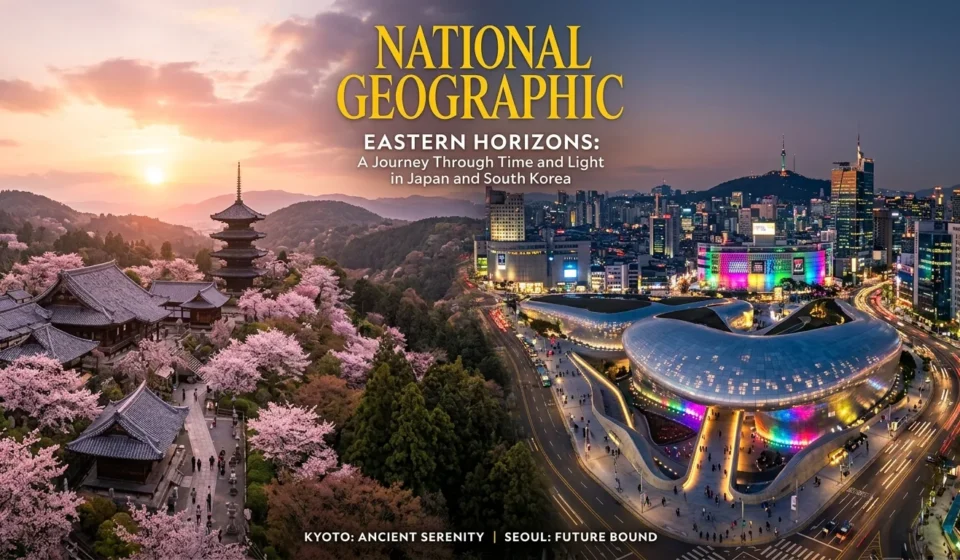

Japan vs. South Korea: Choosing Your First-Time Asia Adventure
Alright, fellow wanderers, let’s talk about one of the most exciting travel dilemmas out there: you’ve decided to embark on your first big Asian adventure, and your sights are set on two absolute powerhouses – Japan and South Korea. Both promise unforgettable experiences, deep cultural dives, and incredible food. But which one is the perfect fit for your inaugural journey?
Table Of Content
- Japan vs. South Korea: Choosing Your First-Time Asia Adventure
- The Vibe Check: Culture & Atmosphere
- Feast Your Way: The Food Scene
- Breaking the Bank: Realistic Budgeting
- Getting Around: Transportation & Logistics
- Safety & Language
- Recommended Stay Duration & Best Time to Visit
- Hidden Gems & Off-the-Beaten-Path
- Which is Best for YOU?
- Final Thoughts for First-Timers
As someone who’s spent countless weeks exploring the back alleys of Kyoto and hiking the trails around Jeju, I can tell you there’s no single “best.” It all comes down to your priorities. Let’s break down what each country offers, helping you make an informed choice for your first-ever deep dive into East Asia.
The Vibe Check: Culture & Atmosphere
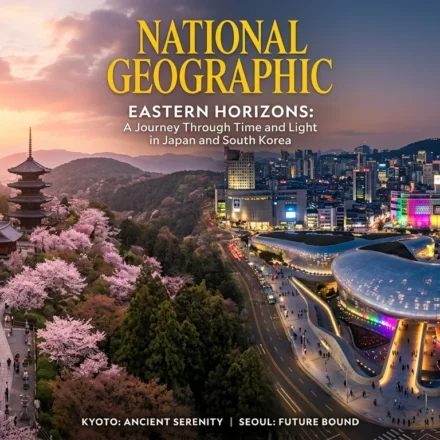
- Japan: Stepping into Japan often feels like entering a meticulously crafted world where ancient traditions meet futuristic innovation. There’s a profound sense of order, respect, and quiet efficiency. The culture is deeply rooted in etiquette, politeness, and harmony. You’ll experience moments of serene beauty in temples and gardens, juxtaposed with the dazzling chaos of Tokyo’s Shibuya Crossing. It’s often described as an orderly, respectful, and visually stunning experience.
- South Korea: Korea, while equally respectful, feels a bit more dynamic, energetic, and perhaps a touch more boisterous. There’s a palpable “hustle and bustle,” especially in cities like Seoul, driven by its vibrant K-pop, K-drama, and gaming culture. It blends a rich history with hyper-modernity, and you’ll find a welcoming, often passionate, spirit. It can feel more approachable and less intimidating for those worried about cultural faux pas, though respect is still paramount.
Feast Your Way: The Food Scene
- Japan: Oh, Japan! The land of ramen, sushi, tempura, wagyu, and intricate kaiseki meals. Japanese cuisine is world-renowned for its precision, delicate flavors, and artistic presentation. Eating out can range from incredibly affordable (think ¥500-1000 for a delicious bowl of ramen) to high-end Michelin-starred experiences. Convenience stores (konbini) are also a goldmine for surprisingly good, budget-friendly meals and snacks.
- South Korea: Get ready for bold flavors, spicy kicks, and communal dining experiences! Korean food is all about banchan (small side dishes), kimchi, BBQ (samgyeopsal), bibimbap, tteokbokki (spicy rice cakes), and comforting stews. Street food is king and incredibly diverse and affordable (₩3,000-10,000 per dish). Many restaurants are designed for sharing, making it a fantastic experience for groups.
Breaking the Bank: Realistic Budgeting
This is often the deciding factor for first-timers!
- Japan: Generally, Japan is the more expensive of the two, especially for accommodation and transport.
- Accommodation: Expect to pay anywhere from $40-70/night for a good hostel or budget hotel, or $80-150+/night for a mid-range hotel or a traditional ryokan (traditional Japanese inn) experience in Kyoto. A family-run guesthouse in the hills above Chefchaouen for $35/night (oops, wrong article example, let’s fix that) – I meant a family-run minshuku (guesthouse) in a smaller town like Takayama for around $60-80/night.
- Food: Can be surprisingly affordable if you stick to local eateries, ramen shops, and konbini. Budget $30-50/day.
- Transport: The Japan Rail Pass is excellent for extensive travel but can be pricey. Individual bullet train tickets add up. Budget $20-50/day depending on travel frequency.
- Daily Average: $100-180+ per person.
- South Korea: Offers excellent value for money without compromising on quality.
- Accommodation: Hostels are plentiful at $20-40/night. Mid-range hotels or a charming hanok (traditional Korean house) stay in Jeonju might be $60-100/night.
- Food: Street food and local restaurants are incredibly cheap and delicious. Budget $20-40/day.
- Transport: Efficient subways and buses in cities, and a well-connected intercity bus/train network. The T-Money card makes urban travel seamless. Budget $10-30/day.
- Daily Average: $70-130+ per person.
Getting Around: Transportation & Logistics
- Japan: World-class public transportation. The Shinkansen (bullet train) is iconic and incredibly efficient. City subways are extensive. English signage is present in major cities and tourist hubs, but can be sparse in rural areas. Getting a Suica or Pasmo IC card for city travel is a must.
- South Korea: Equally impressive and efficient. Seoul’s subway system is one of the best globally, with excellent English announcements and signage. Intercity buses are a fantastic, affordable way to connect cities. The T-Money card is your best friend for all public transport.
Safety & Language
- Safety: Both Japan and South Korea consistently rank among the safest countries in the world. Solo female travelers often feel very secure. Exercise general travel precautions, but violent crime is extremely rare.
- Language Barrier:
- Japan: English proficiency varies. While major hotels, train stations, and tourist sites have English speakers, venturing off the beaten path can present communication challenges. Google Translate is your friend, and knowing a few basic Japanese phrases (
konnichiwa, arigato, sumimasen
) goes a long way.
- South Korea: English is generally more prevalent in Seoul and other major cities, especially among younger generations. Many signs are bilingual. Korean is a phonetic language, making it slightly easier to attempt reading signs, but again, a translation app is invaluable.
- Japan: English proficiency varies. While major hotels, train stations, and tourist sites have English speakers, venturing off the beaten path can present communication challenges. Google Translate is your friend, and knowing a few basic Japanese phrases (
Recommended Stay Duration & Best Time to Visit
- Recommended Stay Duration:
- Japan: I’d suggest at least 10-14 days to experience Tokyo, Kyoto, and maybe one or two other regions without feeling rushed.
- South Korea: You can get a good feel for Korea in 7-10 days, covering Seoul, Busan, and perhaps a historical city like Gyeongju or Jeonju.
- Best Time to Visit:
- Both: Spring (March-May) for cherry blossoms (Sakura in Japan, Beotkkot in Korea) and pleasant weather, or Autumn (September-November) for stunning fall foliage and comfortable temperatures. Summer (June-August) can be hot and humid with monsoon rains, and Winter (December-February) is cold but offers festive lights and ski opportunities.
Hidden Gems & Off-the-Beaten-Path
- Japan: Beyond the golden route, explore the art islands of Naoshima, the ancient cedar forests of Yakushima (GPS: 30.3479° N, 130.5284° E), or the snow monkeys of Jigokudani Monkey Park. Rent a car and explore the Noto Peninsula for rural charm and coastal beauty.
- South Korea: Escape Seoul to the tranquil temple stays in the mountains (e.g., Haeinsa Temple), hike in Seoraksan National Park (GPS: 38.1065° N, 128.4682° E), or discover the unique volcanic landscapes and pristine beaches of Jeju Island.
Which is Best for YOU?
- Choose Japan if you:
- Are fascinated by a unique blend of ancient traditions and hyper-modernity.
- Prioritize efficiency, order, and impeccable service.
- Dream of exquisite, delicate cuisine and world-class fine dining.
- Don’t mind a slightly higher budget.
- Are intrigued by a culture that might feel more “foreign” and distinct.
- Choose South Korea if you:
- Are looking for a more budget-friendly adventure without sacrificing quality.
- Love vibrant, dynamic cities and a lively pop culture scene.
- Are excited by bold, spicy flavors and communal dining experiences.
- Want a destination that feels a bit more accessible and perhaps easier to navigate for a first-timer due to more prevalent English.
- Enjoy diverse landscapes, from mountains to islands.
Final Thoughts for First-Timers
No matter which you choose, both Japan and South Korea offer incredible experiences for first-time international travelers. My advice? Embrace the unexpected, learn a few basic phrases, stay open to new experiences, and always practice sustainable travel by respecting local customs, minimizing waste, and supporting local businesses. Whichever you pick, you’re in for an epic journey!