


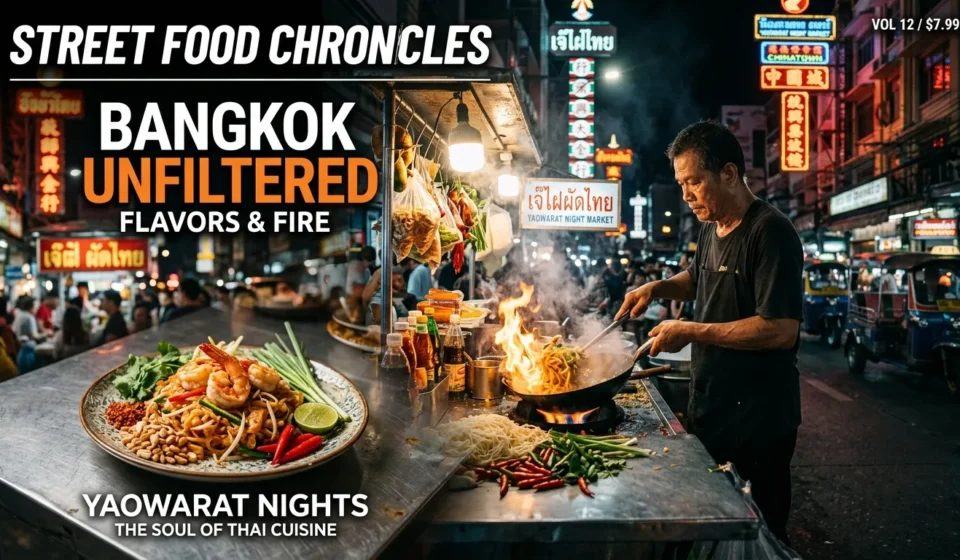

Ah, Bangkok! The City of Angels, a sensory explosion, and without a doubt, one of the world’s undisputed culinary capitals. As someone who’s spent countless weeks getting happily lost in its labyrinthine soi (alleys) and bustling markets, I can tell you that eating in Bangkok isn’t just about sustenance; it’s an adventure, a cultural immersion, and an absolute highlight of any trip.
Table Of Content
- Street Food: The Heartbeat of Bangkok’s Culinary Scene
- Why Dive into Street Food?
- Must-Try Street Food Dishes
- Where to Find the Best Street Food
- Street Food Savvy: Tips for a Safe and Delicious Experience
- Mid-Range Magic: Local Eateries & Unique Cafes
- Recommended Mid-Range Spots
- Elevated Experiences: Bangkok’s Fine Dining Scene
- Where Culinary Art Meets Thai Flavors
- Fine Dining Etiquette & Reservations
- Essential Eating Tips for Bangkok
- Best Time to Visit
- Getting Around for Foodies
- Budgeting for Your Bites
- Navigating Dietary Needs
- Sustainable Eating in the City of Angels
- Cultural Etiquette
- Ready to Feast?
Forget generic “top 10” lists. This is your practical guide from a seasoned wanderer, designed to help you navigate Bangkok’s incredible food landscape, from humble plastic stools on a bustling sidewalk to tables adorned with Michelin stars. Get ready to eat like a local, discover hidden gems, and create unforgettable gastronomic memories!
Street Food: The Heartbeat of Bangkok’s Culinary Scene
You can’t talk about eating in Bangkok without starting with street food. It’s fresh, fast, incredibly flavorful, and unbelievably cheap. This isn’t just quick eats; it’s a way of life, a social hub, and a true testament to Thai culinary prowess. Don’t be shy – dive in!
Why Dive into Street Food?
- Authenticity: Experience genuine Thai flavors prepared right before your eyes.
- Variety: From savory to sweet, spicy to mild, there’s something for everyone.
- Affordability: A full meal can cost you as little as 40-80 THB (approximately $1.10 – $2.20 USD).
- Atmosphere: The sights, sounds, and smells are an experience in themselves.
Must-Try Street Food Dishes
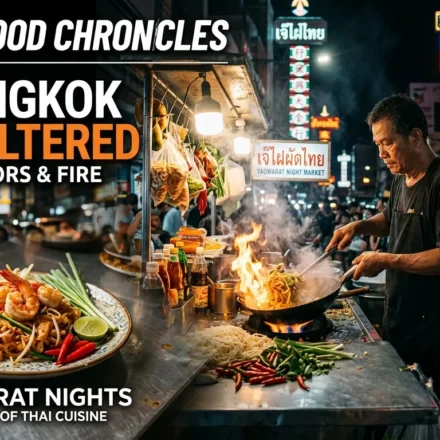
- Pad Thai: The classic stir-fried noodles with shrimp or chicken, tofu, peanuts, and bean sprouts. Look for a vendor cooking it fresh on a hot wok.
- Boat Noodles (Kuay Teow Reua): Small bowls of intensely flavorful pork or beef noodle soup. You stack your empty bowls to count your meal!
- Som Tum (Green Papaya Salad): Spicy, sour, sweet, and salty – a refreshing explosion of flavors. Ask for “mai phet” if you can’t handle too much spice.
- Satay: Grilled skewers of marinated pork or chicken, served with a rich peanut sauce and pickled cucumber relish.
Where to Find the Best Street Food
- Yaowarat (Chinatown): As dusk falls, this area transforms into a vibrant food haven. Head to T&K Seafood for fresh seafood or explore the countless noodle and dim sum stalls.
- Or Tor Kor Market: (Near Chatuchak Weekend Market) While a bit pricier, it’s renowned for its immaculate stalls, fresh produce, and ready-to-eat gourmet Thai dishes. GPS: 13.8055, 100.5560
- Wang Lang Market: A bustling local market near Siriraj Hospital. Accessible by ferry from Tha Chang pier. Excellent for authentic, less touristy street food. GPS: 13.7570, 100.4855
Street Food Savvy: Tips for a Safe and Delicious Experience
- Look for queues: A busy stall usually means fresh ingredients and good taste.
- Observe hygiene: Choose vendors who handle food hygienically and have clean cooking surfaces.
- Eat where locals eat: Always a good rule of thumb anywhere in the world.
- Cash is king: Most street vendors only accept cash.
Mid-Range Magic: Local Eateries & Unique Cafes
For those times you want a bit more comfort than a plastic stool, but still crave authentic flavors without the fine-dining price tag, Bangkok offers a fantastic array of mid-range restaurants. These are often family-run establishments or trendy spots showcasing modern Thai cuisine.
Recommended Mid-Range Spots
- Supanniga Eating Room: Multiple branches (Thonglor, Sathorn, Tha Tien) offering traditional Thai recipes from the owner’s grandmother. Dishes like Gaeng Pu Bai Cha Plu (crab curry with betel leaves) are divine. Expect to pay around 300-600 THB ($8-$16 USD) per dish. Thonglor Branch
- Baan Phadthai: Tucked away in Charoenkrung, this Michelin Bib Gourmand spot elevates the humble Pad Thai to an art form. Their crab Pad Thai is legendary. A bit pricier for Pad Thai, but worth it (around 180-300 THB/$5-$8 USD). Location
- Jay Fai (Raan Jay Fai): While technically a street food stall, this legendary establishment has a Michelin Star and prices to match. Famous for her crab omelette (Kai Jeaw Poo) and Pad Kee Mao Talay (drunken noodles with seafood). Expect long waits and a steep bill (800-1500 THB/$22-$40 USD per dish). Reservations are essential, or be prepared to queue for hours from early morning. Location
Your realistic daily budget for food in this category would be around 700-1500 THB ($19-$40 USD) per person, depending on how many dishes you share.
Elevated Experiences: Bangkok’s Fine Dining Scene
In recent years, Bangkok has soared onto the global fine dining stage, boasting numerous Michelin-starred restaurants pushing the boundaries of Thai and international cuisine. This is where culinary art meets impeccable service and exquisite ambiance. Think of it as a journey for your taste buds, perfect for a special occasion or if you’re a serious foodie.
Where Culinary Art Meets Thai Flavors
- Sorn (2 Michelin Stars): Focusing on Southern Thai cuisine with an emphasis on local, seasonal ingredients. An incredible journey of complex flavors. Tasting menu only, typically 6000-8000 THB ($165-$220 USD) per person. Reservations are notoriously difficult, often needing to be made months in advance.
- Le Du (1 Michelin Star): Modern Thai cuisine with a focus on seasonal ingredients and fermentation techniques. More accessible than Sorn but equally innovative. Tasting menu around 4500 THB ($125 USD) per person. Location
- Blue by Alain Ducasse (1 Michelin Star): For a taste of exquisite French cuisine with a stunning view of the Chao Phraya River, located in IconSiam. Expect flawless service and presentation. Tasting menus start from around 5000 THB ($135 USD). Location
Fine Dining Etiquette & Reservations
- Dress code: Smart casual to formal (no shorts, flip-flops).
- Budget: Expect to spend anywhere from 3,000 THB to 10,000+ THB ($80 – $275+ USD) per person, excluding drinks.
Essential Eating Tips for Bangkok
Best Time to Visit
The cool and dry season (November to February) is ideal for exploring Bangkok’s outdoor food markets and street stalls. Temperatures are milder (20-30°C / 68-86°F) and humidity is lower. The hot season (March to May) can be scorching, while the rainy season (June to October) brings frequent downpours, which can sometimes disrupt street food plans but also offer a chance to duck into cozy cafes.
Getting Around for Foodies
- BTS Skytrain & MRT Subway: Efficient, air-conditioned, and great for covering longer distances, especially to areas like Sukhumvit, Silom, and Chatuchak. Fares typically 16-59 THB.
- Grab (ride-hailing app): Convenient for door-to-door service, especially in areas not covered by BTS/MRT. Expect 80-200 THB for most city rides.
- Tuk-tuks: A quintessential Bangkok experience! Negotiate the fare BEFORE getting in. Fun for short distances but avoid during peak traffic. Prices vary wildly, 50-200 THB.
- Chao Phraya Express Boat: Excellent for riverside attractions and markets (like Wang Lang). Fares 15-30 THB.
Budgeting for Your Bites
A realistic daily food budget could be: Budget Traveler: 250-400 THB ($7-$11 USD) for street food and simple local eateries. Mid-Range Traveler: 700-1500 THB ($19-$40 USD) for a mix of street food and sit-down restaurants. Luxury Traveler: 2000+ THB ($55+ USD) for fine dining experiences.
Navigating Dietary Needs
Communicating dietary restrictions can be challenging but not impossible. Learn a few key phrases: “Mai Sai Phak” (no vegetables – useful for allergies), “Mai Phet” (not spicy), “Gin Jay” (vegetarian/vegan, literally “eat monastically”). For serious allergies, having a Thai translation card is highly recommended.
Sustainable Eating in the City of Angels
- Reduce plastic: Carry a reusable water bottle. Decline plastic bags for small purchases. Many vendors use plastic cutlery – if you have a travel set, use it!
- Support local: Choose local street food vendors and family-run restaurants over international chains.
- Minimize food waste: Order what you can eat. Most street food portions are perfect for one person.
Cultural Etiquette
- The Wai: A polite greeting, bow with hands pressed together. Not typically used with street food vendors, but always appreciated.
- Eating utensils: Thais typically use a fork and spoon. The fork is used to push food onto the spoon, which is then used to eat. Chopsticks are common for noodle dishes.
Ready to Feast?
Bangkok’s culinary landscape is as diverse and exciting as the city itself. Whether you’re a budget traveler seeking the thrill of street-side flavors or a gourmand in pursuit of Michelin stars, this city delivers. So pack your appetite, keep an open mind, and get ready to embark on an unforgettable culinary journey. Happy eating, wanderers!