

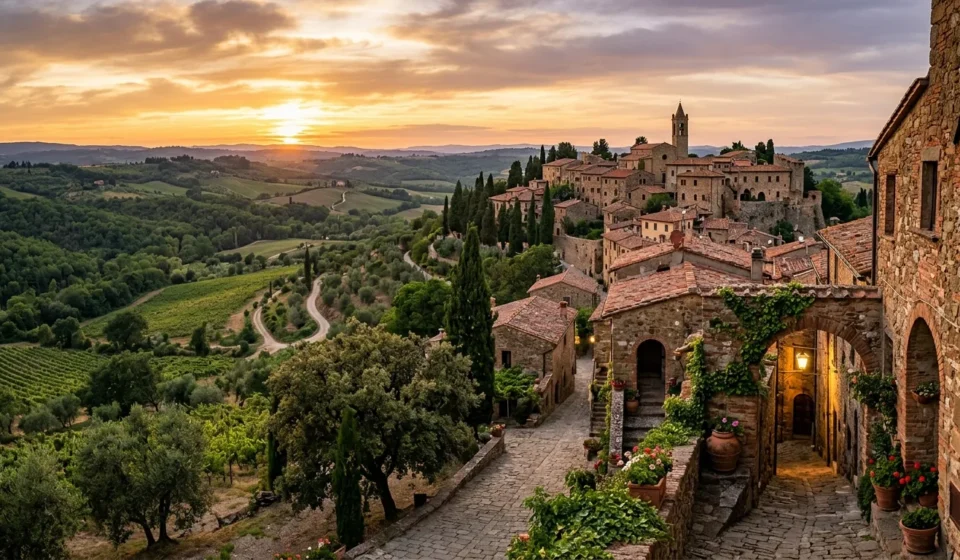

Ah, Tuscany. The name itself conjures images of rolling hills, cypress-lined drives, and medieval cities steeped in art and history. Most travelers flock to the iconic giants like Florence, Siena, and Pisa, and for good reason! But for us at Destination Wanderer, the real magic often lies just beyond the well-trodden path. After over a decade of exploring every nook and cranny of this incredible region, I’m here to tell you that Tuscany’s true soul whispers from its lesser-known, hidden gem villages.
Table Of Content
- Planning Your Hidden Gem Tuscan Adventure
- Best Time to Visit
- Realistic Daily Budget
- Getting Around
- Cultural Etiquette & Sustainable Travel
- 8 Hidden Gem Villages in Tuscany You Must Explore
- 1. Montefioralle (Chianti Classico)
- 2. Pitigliano (Maremma)
- 3. Anghiari (Arezzo Province)
- 4. Poppi (Casentino Region)
- 5. Barga (Garfagnana Region)
- 6. Montemerano (Maremma)
- 7. Fosdinovo (Lunigiana Region)
- 8. Sovana (Maremma)
If you’re looking to peel back the layers and experience authentic Tuscan life, savor local flavors, and wander ancient cobblestone streets without the crowds, you’ve come to the right place. Consider this your personal invitation to step into the Tuscany that tour buses often miss.
Planning Your Hidden Gem Tuscan Adventure
Best Time to Visit
For exploring these charming villages, we highly recommend the shoulder seasons. That’s April-May and September-October. The weather is delightfully mild and sunny (think 18-25°C / 65-77°F), the landscapes are at their most vibrant (spring blooms or autumn colors), and crucially, the tourist crowds are significantly thinner than in peak summer. Plus, you’ll often find better deals on accommodation and flights.
Realistic Daily Budget
Traveling through these smaller villages can be surprisingly affordable, especially if you embrace local eateries and charming B&Bs. Here’s a rough breakdown per person:
- Accommodation: €40-€80 for a comfortable B&B or agriturismo.
- Food: €30-€60 (a mix of local trattorias, market finds, and perhaps a nicer dinner).
- Transport & Activities: €15-€30 (fuel, parking, museum entries, local wine tasting).
Total Daily Budget: €85-€170 per person. This allows for comfort without extravagance.
Getting Around
While public buses connect some larger towns, exploring these hidden villages truly demands a rental car. It offers unparalleled freedom to stop at scenic viewpoints, detour to a local winery, or simply get delightfully lost in the countryside. Prices vary, but expect €30-€60 per day for a compact car, plus fuel. Ensure your rental includes comprehensive insurance.
Cultural Etiquette & Sustainable Travel
Tuscans are warm and welcoming. A simple “Buongiorno” (good morning) or “Buonasera” (good evening) and “Grazie” (thank you) goes a long way. Always dress modestly when visiting churches. For sustainable travel, support local businesses, minimize your waste, respect natural environments, and turn off lights/AC when leaving your accommodation. Embrace “slow travel” – linger, observe, and connect.
8 Hidden Gem Villages in Tuscany You Must Explore
1. Montefioralle (Chianti Classico)
Nestled in the heart of the Chianti Classico region, just above the bustling Greve in Chianti, Montefioralle is a tiny, perfectly preserved medieval walled village. It’s so small you could walk its entire circumference in 15 minutes, but its charm is immense. Believed to be the birthplace of Amerigo Vespucci, this village offers breathtaking views of the surrounding vineyards and olive groves. There are no major attractions, just endless photo opportunities, a couple of excellent local eateries, and a sense of stepping back in time. It’s truly a place to simply *be*.
- What to do: Wander the narrow, concentric streets, enjoy a glass of Chianti Classico at a tiny bar, and soak in the panoramic views.
- Stay & Eat: There are a few small B&Bs. Grab lunch at a local trattoria like La Castellana for authentic Tuscan fare (expect €20-€30 per person for a good meal).
2. Pitigliano (Maremma)
Often called “Little Jerusalem” due to its historic Jewish community, Pitigliano is a dramatic sight, built directly onto a cliff of volcanic tufa rock. Its houses seem to sprout organically from the rock face, creating an unforgettable skyline. This Etruscan-rooted town in the Maremma region is a labyrinth of winding streets, tunnels, and ancient cellars.
- What to do: Explore the Jewish Ghetto, visit the Palazzo Orsini, and walk along the “vie cave” – ancient Etruscan paths carved into the tufa.
- Stay & Eat: Several charming guesthouses are carved into the rock. Try Trattoria del Grillo for incredible local dishes and wine.
3. Anghiari (Arezzo Province)
Perched on a hill overlooking the Tiber Valley, Anghiari is a magnificent medieval village famous for the 1440 Battle of Anghiari (depicted in a lost Leonardo da Vinci fresco). Its unique urban structure, with houses built into the sloping terrain, gives it a “hanging” appearance. It’s a peaceful town with a strong artisan tradition, far from the tourist rush.
- What to do: Stroll the Corso Giacomo Matteotti, visit the Museo della Battaglia e di Anghiari, and browse artisan workshops.
- Stay & Eat: Look for a comfortable B&B in the historic center. Enjoy dinner at Ristorante Nido d’Ape for traditional cuisine.
4. Poppi (Casentino Region)
Dominating the Casentino Valley, Poppi is crowned by one of Tuscany’s most beautiful medieval castles, the Castello dei Conti Guidi. This well-preserved fortress offers stunning views of the surrounding Foreste Casentinesi, Monte Falterona e Campigna National Park. The village itself is charming and tranquil, a perfect base for exploring the wilder, greener side of Tuscany.
- What to do: Tour the Castello di Poppi, explore the charming old town, and hike in the nearby national park.
- Stay & Eat: Consider an agriturismo just outside town. Ristorante La Ferrata offers local specialties.
5. Barga (Garfagnana Region)
Hidden in the mountainous Garfagnana region north of Lucca, Barga is known as “the most Scottish town in Italy” due to historical emigration. It boasts a stunning Romanesque Duomo (Cathedral) that offers panoramic views of the Apuan Alps. This village feels worlds away from the classic Tuscan postcard, offering a refreshing mountain escape.
- What to do: Visit the Duomo di San Cristoforo, wander the medieval streets, and enjoy the crisp mountain air.
- Stay & Eat: Find a cozy guesthouse in the old town. Don’t miss the local Garfagnana specialties like farro (spelt) soup.
6. Montemerano (Maremma)
While many visitors flock to the nearby Saturnia hot springs, few take the time to explore the exquisite medieval village of Montemerano. This tiny, perfectly preserved hamlet in the Maremma region is a true gem, with a beautiful central piazza, cobblestone streets, and a charming atmosphere. It feels like stepping into a living painting, quiet and utterly enchanting.
- What to do: Admire the frescoes in the Church of San Giorgio, wander aimlessly, and enjoy the tranquility.
- Stay & Eat: Several quaint B&Bs. Da Caino (Michelin-starred) is here if you want to splurge, but many excellent trattorias offer more budget-friendly options.
7. Fosdinovo (Lunigiana Region)
Perched high in the northern Lunigiana region, Fosdinovo offers a dramatic setting with its imposing Malaspina Castle. This area of Tuscany, bordering Liguria, is vastly different from the rolling hills of Chianti, characterized by mountains, chestnut forests, and a rugged coastline not far off. The castle itself is a fascinating journey through history, with stunning views extending to the sea on clear days.
- What to do: Tour the Castello Malaspina, explore the ancient village, and enjoy the unique mountain-to-sea vistas.
- Stay & Eat: Find a local agriturismo or small hotel. The cuisine here has a Ligurian influence, with more seafood and focaccia.
8. Sovana (Maremma)
Just a stone’s throw from Pitigliano, Sovana is another incredible tufa town, but even smaller and quieter, offering a truly intimate glimpse into Tuscany’s ancient past. It’s an Etruscan jewel, with a stunning Duomo and an archaeological park filled with Etruscan tombs and “vie cave” (sunken roads). This village is a UNESCO World Heritage site waiting to be slowly discovered.
- What to do: Visit the Concattedrale di San Pietro, explore the Sovana Archaeological Park, and wander the tranquil streets.
- Stay & Eat: A few charming B&Bs are available. Enjoy authentic Tuscan fare at a local osteria like Enoteca A. della Fortezza.
There you have it, fellow wanderers! Eight incredible villages that offer a richer, more authentic taste of Tuscany. These are the places where memories are truly made, away from the selfie sticks and bustling crowds. So, pack your bags, fire up that rental car, and get ready to uncover the secret charms of Tuscany with Destination Wanderer leading the way!