





Stepping off the plane into Tokyo for the first time can feel like diving headfirst into a futuristic maze. The city is colossal, vibrant, and its transportation system? Well, it’s legendary for its efficiency, punctuality, and, let’s be honest, its sheer complexity at first glance. But don’t let those intricate subway maps intimidate you! I’ve spent years navigating Tokyo’s nooks and crannies, and I’m here to tell you that mastering its transit is not only achievable but actually one of the most rewarding parts of experiencing the city like a local. Forget expensive taxis; we’re going to get you moving like a seasoned Tokyoite.
Table Of Content
- The Heartbeat of Tokyo: Trains & Subways
- JR, Tokyo Metro, and Toei – What’s the Difference?
- Your Best Friend: The IC Card (Suica/Pasmo)
- Day Passes & The Japan Rail Pass: When to Use Them
- Beyond the Rails: Buses, Taxis, and Walking
- Hopping on a Bus
- Taxis: When Splurging Makes Sense
- The Joy of Pavement-Pounding
- Mastering the Maze: Practical Tips for Smooth Journeys
- Essential Navigation Tools
- Decoding Station Signage and Exits
- The Golden Rules of Tokyo Transit Etiquette
- Budgeting Your Rides & Staying Safe
- Realistic Costs Per Ride
- Safety and Accessibility
- Sustainable Travel on the Go
My goal here is simple: to equip you with all the practical knowledge you need to glide through Tokyo, from Shibuya’s scramble to the quiet backstreets of Yanaka, without a hitch. We’ll demystify the different lines, explain what an IC card is and why it’s your best friend, and share the insider tips that will save you time, stress, and money. Ready to explore the world’s greatest metropolis with confidence? Let’s dive in.
The Heartbeat of Tokyo: Trains & Subways
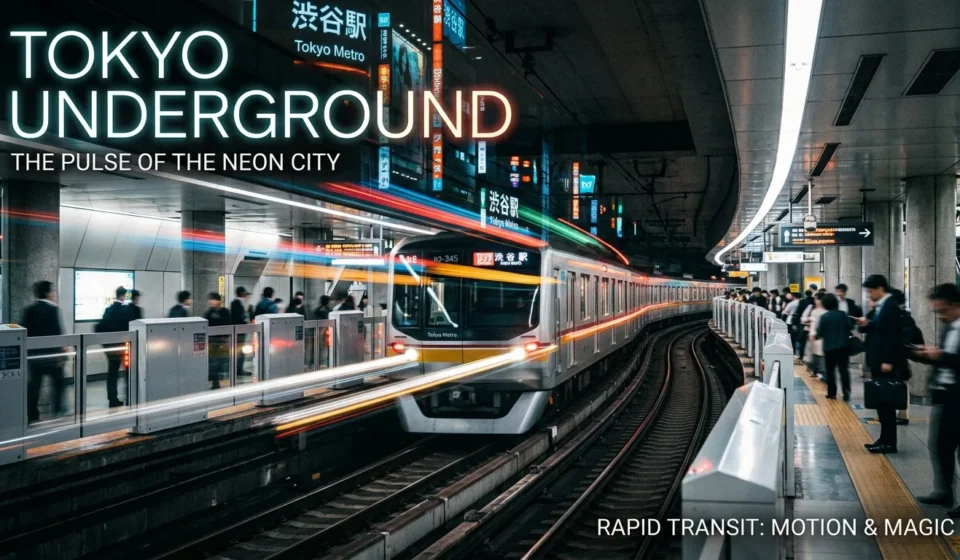
Tokyo’s public transportation network is dominated by its extensive train and subway lines. These are not just ways to get from A to B; they are the literal arteries of the city, carrying millions of people daily with astonishing precision. Understanding the core systems is your first step to unlocking Tokyo.
JR, Tokyo Metro, and Toei – What’s the Difference?
Initially, this can be the most confusing part. You’ll primarily encounter three main operators: JR (Japan Railways), Tokyo Metro, and Toei Subway. Think of JR as the overarching national network, with lines like the Yamanote Line forming a crucial loop around central Tokyo, connecting major hubs like Shinjuku, Shibuya, and Ueno. Tokyo Metro and Toei Subway are the city’s two main subway systems, running deep underground and covering more localized, central areas. While they are different companies, they often share stations and transfer points, making connections seamless.
The good news? For the average traveler exploring Tokyo, you don’t really need to obsess over which company operates which line. Why? Because of our next essential tip: the IC card. However, understanding that different companies exist is helpful if you’re looking at specific day passes, as some only cover one system (e.g., a Tokyo Metro 24-hour pass only works on Metro lines).
Your Best Friend: The IC Card (Suica/Pasmo)
If there’s one piece of advice you take from this guide, it’s this: get an IC card. An IC card (short for “Integrated Circuit” card) is a rechargeable smart card that allows you to simply tap and go on almost all trains, subways, and buses across Japan, including all of Tokyo’s systems. The two most common brands in Tokyo are Suica and Pasmo, but they are completely interchangeable. Imagine skipping ticket machines, not worrying about exact fares, and just breezing through ticket gates – that’s the magic of an IC card.
You can purchase an IC card at any major train station ticket vending machine or counter. They typically cost ¥1,000 to ¥2,000, which includes a ¥500 refundable deposit and the rest as usable credit. To recharge it, simply find a ticket vending machine, insert your card, and add more yen. It’s incredibly straightforward, even with limited Japanese. Honestly, this little card will be the unsung hero of your Tokyo adventure.
Day Passes & The Japan Rail Pass: When to Use Them
For some travelers, day passes can be a good option. The Tokyo Metro 24/48/72-hour Ticket offers unlimited rides on Tokyo Metro and Toei Subway lines for the specified duration. If you plan to cram a lot of sightseeing into a short period, especially within central Tokyo, these can save you a bit of money. A 24-hour pass typically costs around ¥800. You can buy them at subway station ticket machines or tourist information centers.
Now, let’s talk about the Japan Rail Pass. This is fantastic for long-distance travel across Japan, but it’s generally NOT cost-effective for simply getting around within Tokyo. While it covers JR lines in Tokyo (like the Yamanote Line), it doesn’t cover the extensive Tokyo Metro or Toei Subway lines. So, if your primary goal is exploring Tokyo itself, stick with an IC card and perhaps a specific subway day pass. Don’t be that traveler who buys an expensive JR Pass just to navigate the city – it’s often a waste of money in this context.
Beyond the Rails: Buses, Taxis, and Walking
While trains and subways are your primary tools, Tokyo offers other ways to navigate, each with its own advantages.
Hopping on a Bus
Tokyo’s bus system is extensive but less intuitive for tourists compared to the trains. However, buses can be incredibly useful for reaching specific neighborhoods or attractions not directly served by a subway station, or for a more scenic, above-ground journey. You typically enter the bus from the front, tap your IC card or pay the flat fare (usually around ¥210) as you board, and exit from the middle or rear door. Google Maps will give you accurate bus routes and times, making it much easier to use.
Taxis: When Splurging Makes Sense
Tokyo taxis are impeccably clean, reliable, and the drivers are incredibly polite. They are, however, significantly more expensive than public transport. A typical ride starts around ¥500-¥700 for the first kilometer or two, then adds charges rapidly. I usually reserve taxis for late-night journeys when the subways have stopped (most run until around midnight to 1 AM), or when traveling with heavy luggage to and from accommodation. Apps like Uber and JapanTaxi are available and work well, allowing you to pre-book and pay.
The Joy of Pavement-Pounding
Never underestimate the power of your own two feet! Tokyo is incredibly pedestrian-friendly, with wide sidewalks and fascinating streetscapes. Many areas, like Shibuya, Shinjuku, or Ginza, are best explored by walking between attractions once you’ve arrived by train. Not only is it free, but it’s also the best way to stumble upon those hidden cafes, charming shops, and local scenes that you’d miss underground or whizzing by in a taxi. Based on my experience, some of the best discoveries are made when you simply wander.
Mastering the Maze: Practical Tips for Smooth Journeys
Now that you know the tools, let’s talk about how to use them like a pro. These tips will make your Tokyo transit experience stress-free.
Essential Navigation Tools
Google Maps is your absolute best friend. Period. It provides real-time train and subway schedules, platform numbers, transfer information, and even tells you which exit to take (crucial in huge stations!). Download offline maps for Tokyo if you’re worried about data. Other useful apps include Japan Travel by NAVITIME, which offers detailed train schedules and allows you to filter for JR Pass eligibility, and the Tokyo Metro Subway Navigation app, which is specifically for the subway systems.
Decoding Station Signage and Exits
Tokyo’s stations can be enormous, with multiple lines converging and dozens of exits. Don’t panic! Signage is excellent, usually in Japanese and English. Lines are color-coded and numbered (e.g., Ginza Line is yellow, G09). Pay attention to the exit numbers – a specific exit can save you a 10-minute walk above ground. Always check which exit you need for your destination *before* you leave the platform, as some stations have underground malls or passages leading far from the main concourse.
The Golden Rules of Tokyo Transit Etiquette
Japanese public transport is a masterclass in efficiency and respect. Here are a few unwritten rules to follow:
- Silence is Golden: Avoid loud conversations, phone calls, or playing music without headphones. It’s a quiet space.
- Queue Up: Always wait in line behind the yellow markers on the platform for the train doors to open. Let passengers exit completely before you try to board.
- Mind the Gap: Literally, watch your step! And don’t block the doors.
- Priority Seats: These are for the elderly, pregnant women, those with disabilities, or small children. Give them up if you’re able-bodied.
- No Eating or Drinking: Generally, avoid consuming food or drinks on trains and in stations (outside of designated areas).
For example, imagine this situation: You’re on a crowded Yamanote Line train, chatting animatedly with your travel buddy about your day. Suddenly, you notice a few subtle glances your way. No one says anything, but the message is clear – you’re being a bit too loud. A quick whisper to your friend and you both quiet down, blending back into the respectful hush. It’s a small adjustment, but it makes a big difference in showing respect for local customs. It’s all about collective harmony, or wa, which extends to public spaces.
Budgeting Your Rides & Staying Safe
Navigating Tokyo is incredibly safe and surprisingly affordable when you stick to public transport.
Realistic Costs Per Ride
A typical subway or train ride within Tokyo will cost you anywhere from ¥170 to ¥300, depending on the distance and the operator. An IC card makes this payment process seamless, as it automatically calculates the fare. So, if you’re planning on 3-5 rides a day, budget roughly ¥500-¥1500 for daily transport. Compared to many major global cities, Tokyo offers excellent value for its public transport.
Safety and Accessibility
Tokyo’s public transport is one of the safest systems in the world. Theft is extremely rare, and you’ll often see people napping with their phones in hand. However, like any crowded area, it’s wise to be aware of your surroundings. During rush hour (roughly 7:30 AM to 9:30 AM and 5:00 PM to 7:00 PM), trains can get incredibly packed. You might encounter “pushers” (oshiawase) on platforms at some stations, whose job is to literally push people into the trains to fit everyone. Some lines also have women-only cars during peak hours, usually indicated by pink signage.
For accessibility, major stations are increasingly equipped with elevators and escalators, and tactile paving is common for visually impaired passengers. However, some older stations or exits might still require using stairs. Most apps will indicate accessible routes.
Sustainable Travel on the Go
Choosing Tokyo’s public transportation is inherently a sustainable travel choice. You’re significantly reducing your carbon footprint compared to renting a car or relying solely on taxis. By embracing the local way of getting around, you’re not just being eco-conscious but also immersing yourself deeper into the city’s rhythm. It’s a win-win: good for the planet, good for your wallet, and great for your travel experience.
There you have it – your comprehensive roadmap to conquering Tokyo’s incredible transit system. What once might have seemed daunting will soon feel like second nature. With your IC card in hand, Google Maps guiding the way, and a respectful understanding of local etiquette, you’re not just moving through Tokyo; you’re becoming a part of its amazing flow. So go ahead, tap that card, step aboard, and get ready to experience every vibrant corner of this magnificent city with confidence. The adventure awaits!