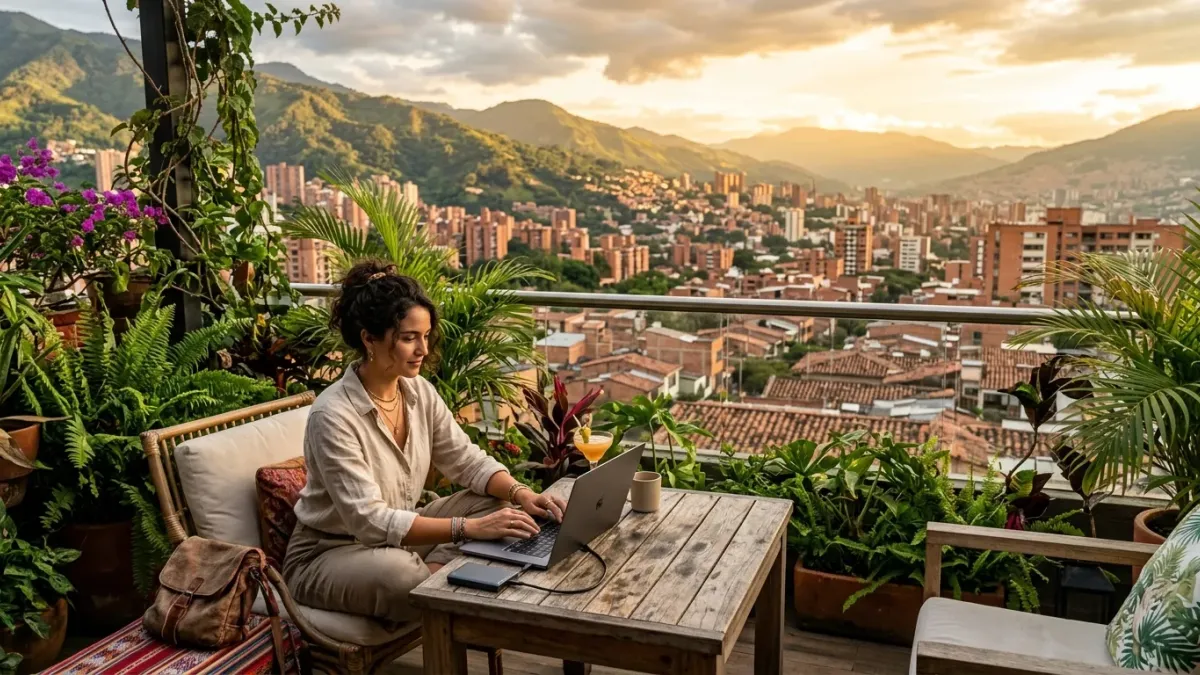
Let's be honest, the digital nomad scene can sometimes feel a bit… saturated. If you’ve spent any time researching remote work destinations, you've likely encountered the same handful of places cropping up again and again. Bali, Chiang Mai, Lisbon – they're popular for a reason, sure, but the crowds and rising costs can often detract from the magic. What if you're craving something different? A place where your dollar stretches further, the culture is rich and immersive, and you can truly discover an authentic slice of life?
That's where Latin America comes in. Having spent over 15 years backpacking and living across this incredible continent, I’ve seen firsthand its immense potential for remote workers looking for both adventure and affordability. Forget the well-worn paths; we're diving into five emerging digital nomad hubs that promise incredible value, unique experiences, and a chance to truly embed yourself in a new culture without breaking the bank. Ready to go beyond the hype?
Why Latin America is Your Next Digital Nomad Playground
Latin America offers a compelling mix for the budget-conscious remote worker. From the vibrant rhythm of its cities to the breathtaking natural landscapes, there’s an endless well of experiences waiting to be tapped. The cost of living in many regions is significantly lower than in North America or Europe, allowing you to enjoy a higher quality of life, sample incredible local cuisine, and explore extensively without constantly checking your bank balance.
When we talk about being a digital nomad, we’re essentially referring to individuals who leverage technology to work remotely from anywhere in the world. This lifestyle often goes hand-in-hand with slow travel, which means spending an extended period (weeks or months) in a single location rather than rushing through multiple destinations. This allows for deeper cultural immersion, genuine connections with locals, and a more sustainable way to experience a place. Latin America, with its welcoming people, affordable amenities, and surprisingly good internet infrastructure in many cities, is perfectly set up for this kind of exploration. Honestly, it’s one of the best continents for getting real bang for your buck.
The Contenders: 5 Emerging LatAm Hubs for Remote Workers
I’ve handpicked these five destinations based on their affordability, growing nomad infrastructure, cultural richness, and overall quality of life. They offer a fantastic alternative to the usual suspects, giving you a chance to forge your own path.
1. Mérida, Mexico: The Yucatecan Gem
Mérida, the capital of Mexico's Yucatán state, is a colonial masterpiece with a vibrant Mayan heritage. It consistently ranks as one of Mexico's safest cities, making it a stress-free choice for solo travelers or families. The city center is a kaleidoscope of colorful buildings, bustling markets, and lively plazas, offering a truly authentic Mexican experience far removed from the resort towns.
- Best Time to Visit: November to March. The weather is dry and pleasantly warm (20-28°C or 68-82°F), perfect for exploring. Avoid April and May, which are scorching hot, and June to October, which is the rainy season (though usually just afternoon showers).
- Realistic Daily Budget: Expect to spend $30-$40 USD per day ($900-$1200 USD/month). This covers a private room in a shared house or a decent Airbnb ($300-$600/month), delicious local food from *comedores* (small, family-run eateries where you can get a full meal for $3-5 USD), and local transport.
- Recommended Stay Duration: 1-3 months. This gives you ample time to explore the city, take Spanish classes, and make day trips to cenotes (natural sinkholes, a must-see!) and Mayan ruins like Uxmal.
- Transportation: Mérida is incredibly walkable, especially its historic center. Local buses and *colectivos* (shared vans running fixed routes) are super cheap, usually 8-10 MXN ($0.50 USD). Uber and taxis are readily available and affordable for longer distances.
- Hidden Gem & Real Example: Explore the lesser-known Santiago neighborhood, especially on Sunday evenings when the streets come alive with local music and dance. For accommodation, I once stayed in a charming, family-run guesthouse just off Parque Santa Ana for about $450 USD/month, which included breakfast. If you're into unique natural spots, seek out Cenote Kankirixche (GPS: 20.7303, -89.4674), which is less crowded than the more famous ones and absolutely stunning.
- Safety & Culture: Mérida is exceptionally safe. Basic Spanish is helpful but not essential in the main tourist areas. Always greet people with a polite "¡Hola!" or "¡Buenos días!" and be respectful of local customs.
2. Antigua, Guatemala: Colonial Charm & Volcano Views
Nestled in a valley surrounded by volcanoes, Antigua is a UNESCO World Heritage site renowned for its well-preserved Spanish colonial architecture, cobblestone streets, and vibrant cultural scene. It's a hub for Spanish language learners and offers a tight-knit community feel, making it easy to connect with fellow nomads and travelers.
- Best Time to Visit: November to April (dry season). Temperatures are mild (18-25°C or 64-77°F) and skies are clear, perfect for volcano hikes and outdoor activities. May to October is the rainy season, with afternoon showers that green up the landscape.
- Realistic Daily Budget: $35-$45 USD per day ($1050-$1350 USD/month). This allows for a private room in a guesthouse or Airbnb ($400-$700/month), delicious street food and local *comedores*, and frequent coffee shop visits.
- Recommended Stay Duration: 1-2 months. This gives you time to immerse in Spanish classes, hike a volcano (Acatenango is a popular overnight trek), and explore nearby Lake Atitlán.
- Transportation: Antigua is very compact and entirely walkable. For trips outside the city, brightly colored "chicken buses" (converted US school buses) are incredibly cheap and an experience in themselves. Shuttle services are also readily available for comfort.
- Hidden Gem & Real Example: Instead of only sticking to the main square, wander through the side streets and discover artisan workshops. Head up to Cerro de la Cruz for panoramic views of the city and Volcán Agua, especially at sunset (GPS: 14.5684, -90.7301). A great budget stay I found was a private room in a lovely family-run *casa particular* (a private home offering rooms for rent) near the Santa Catalina Arch for $30/night, including breakfast.
- Safety & Culture: Antigua is generally safe during the day. Exercise caution at night, especially on unlit streets. Guatemalan culture is warm and hospitable; learning a few Spanish phrases goes a long way. Support local artisans and try to minimize plastic waste.
3. Arequipa, Peru: The White City's Allure
Arequipa, Peru's "White City," is a stunning colonial city built primarily from white volcanic sillar stone, giving it a unique glow. It's surrounded by towering volcanoes and is the gateway to the magnificent Colca Canyon. The food scene is legendary, and the pace of life is wonderfully relaxed, making it ideal for slow travel.
- Best Time to Visit: April to December (dry season). Expect sunny days and mild temperatures (15-22°C or 59-72°F). January to March is the rainy season, which can bring afternoon downpours.
- Realistic Daily Budget: $25-$35 USD per day ($750-$1050 USD/month). This budget allows for a comfortable private room ($300-$500/month), incredible Peruvian cuisine from local markets and *picanterías* (traditional Arequipeñan restaurants) for $4-8 USD per meal, and minimal transport costs due to the city's walkability.
- Recommended Stay Duration: 3 weeks to 2 months. This allows you to explore the stunning Santa Catalina Monastery, hike into Colca Canyon, and truly savor the local gastronomy.
- Transportation: Arequipa’s historic center is easily explored on foot. For longer distances, local buses are very cheap (around 1 PEN, $0.25 USD). Taxis are also plentiful and affordable, just agree on the price before getting in.
- Hidden Gem & Real Example: Head to the San Lázaro neighborhood, Arequipa's oldest barrio, for charming narrow streets and traditional architecture, often overlooked by tourists. For a truly local culinary experience, seek out a *picantería* like La Nueva Palomino (GPS: -16.4024, -71.5458) for authentic Arequipeñan dishes. I once rented a cozy, furnished apartment near Yanahuara for $400 USD/month, offering stunning volcano views.
- Safety & Culture: Arequipa is generally safe, but be aware of your surroundings, especially at night. Peruvians are proud of their heritage; always ask for permission before taking photos of people. Support local businesses and artisans.
4. Bucaramanga, Colombia: The City of Parks
Often overshadowed by Medellín or Bogotá, Bucaramanga is Colombia's "Ciudad Bonita" (Beautiful City) and "City of Parks." It boasts a fantastic spring-like climate year-round, a lower cost of living, and a friendly, welcoming atmosphere. It’s a university city, so there’s a youthful energy and plenty of affordable amenities.
- Best Time to Visit: Year-round, thanks to its consistent spring-like weather (20-28°C or 68-82°F). It's generally less humid than coastal cities.
- Realistic Daily Budget: $28-$38 USD per day ($850-$1150 USD/month). You can find modern apartments for $350-$650/month, and food is incredibly cheap, especially at *corrientazo* restaurants (set lunch menus for $3-6 USD).
- Recommended Stay Duration: 1-2 months. This gives you time to explore its many parks, enjoy the local coffee culture, and venture out to nearby adventure sports hubs like San Gil.
- Transportation: Bucaramanga has an efficient bus system (Metrolínea) and plenty of local buses. Taxis and ride-sharing apps like Uber and InDriver are also widely used and very affordable.
- Hidden Gem & Real Example: Wander through Parque de los Niños, one of the city's many green spaces, popular with locals. For a taste of the outdoors, head to Chicamocha National Park, just an hour's drive away, for incredible canyon views and extreme sports. I found a lovely, modern apartment in the Cabecera neighborhood for $500 USD/month, complete with a small balcony and good internet.
- Safety & Culture: Bucaramanga is generally safe, but like any city, be mindful of your belongings. Colombians are incredibly warm and friendly. Learning some Spanish will greatly enhance your experience.
5. Córdoba, Argentina: University Vibes & Tango Rhythms
Argentina's second-largest city, Córdoba, is a vibrant university town with a rich history, stunning Jesuit architecture, and a lively cultural scene. It offers a more relaxed pace and significantly lower costs than Buenos Aires, while still providing plenty of cultural stimulation, great nightlife, and a welcoming atmosphere for foreigners.
- Best Time to Visit: September to November (spring) or March to May (autumn). Temperatures are mild and pleasant (18-28°C or 64-82°F). Summers (Dec-Feb) can be hot and humid, while winters (June-Aug) are cooler.
- Realistic Daily Budget: $30-$40 USD per day ($900-$1200 USD/month). A private room in a shared apartment or a small Airbnb can be found for $350-$600/month. Eating out is affordable, especially if you enjoy delicious Argentine *parrillada* (BBQ) and empanadas.
- Recommended Stay Duration: 1-3 months. Immerse yourself in the university atmosphere, explore the Jesuit Block (another UNESCO site), and take advantage of its central location for trips to the Sierras Chicas mountains.
- Transportation: Córdoba's center is walkable. The city has an extensive and affordable bus network. Taxis and ride-sharing apps are also readily available.
- Hidden Gem & Real Example: Spend an evening in the Güemes neighborhood, especially during the weekend artisan market, for street art, unique boutiques, and lively bars. For a true taste of local life, seek out a lesser-known *parrillada* in Alta Córdoba. I once rented a spacious room in a shared apartment with other students near Ciudad Universitaria for about $400 USD/month, which was perfect for meeting people.
- Safety & Culture: Córdoba is generally safe, but common sense precautions apply, especially at night. Argentines are passionate and expressive; embrace their love for good food, conversation, and late nights.
Making the Leap: Practical Tips for Your LatAm Adventure
So far, we've covered some fantastic destinations. Now let's get to the really critical point: how do you actually make this happen? Moving to a new continent for remote work involves a bit of planning, but it's totally achievable. First, consider your visa situation. Most Latin American countries offer 90-day tourist visas upon arrival for many nationalities, which is great for starting. Some countries, like Colombia, are even introducing specific digital nomad visas, so always check the latest regulations for your chosen destination.
Connectivity is key for any remote worker. While these cities aren't Silicon Valley, they generally have reliable internet. I've found that buying a local SIM card upon arrival (e.g., Telcel in Mexico, Claro in Peru, Tigo in Guatemala) gives you affordable data for staying connected. Many guesthouses and co-working spaces offer excellent Wi-Fi. Speaking of which, co-working spaces are popping up in all these cities, offering dedicated workspaces and a great way to meet fellow nomads. But what would you do if your Wi-Fi suddenly dropped during a crucial client call? Always have a backup, like a good data plan on your phone!
Safety is always a concern when traveling, but with common sense, you'll be fine. Keep a low profile, don't flash valuables, and be aware of your surroundings. Learning some basic Spanish phrases will not only enrich your experience but also make you feel more secure and confident navigating daily life. Honestly, a simple "Hola, ¿cómo estás?" can open so many doors.
Beyond the Hype: Sustainable & Responsible Nomadism
As seasoned travelers at Destination Wanderer, we believe in exploring the world responsibly. When you choose to be a digital nomad in Latin America, you have a unique opportunity to contribute positively to the local economy and culture. Practice sustainable travel by minimizing your environmental footprint – think reusable water bottles, shopping at local markets, and reducing plastic use.
Culturally, be an engaged and respectful guest. Learn about local customs, support local businesses (from your daily coffee shop to your Airbnb host), and try to give back to the community where you can. By embracing slow travel in these emerging hubs, you're not just finding a cheaper place to live; you're becoming part of a community and experiencing the world in a more profound, meaningful way.
So, if you're feeling the "Bali blues" or just eager to explore beyond the well-trodden paths, Latin America offers a treasure trove of possibilities for the budget-conscious digital nomad. These five emerging hubs are just the beginning. Each one offers a unique blend of culture, affordability, and adventure, promising an unforgettable remote work experience. Which one will be your next office with a view? The journey awaits!