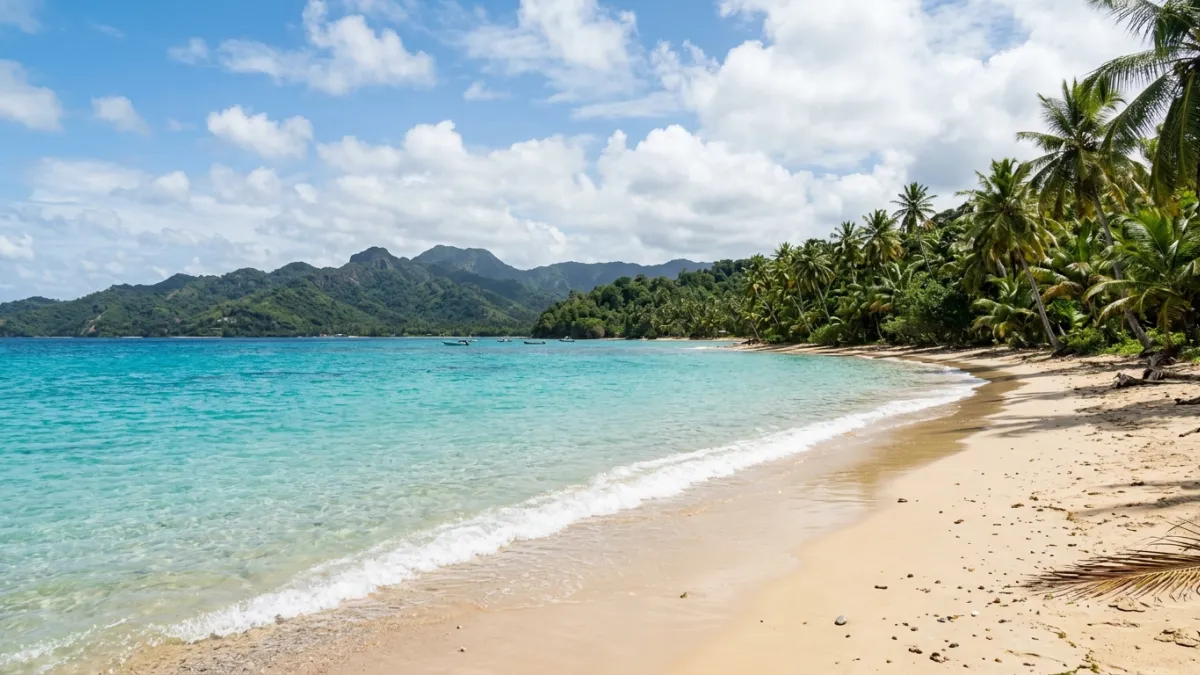
The "Deep Caribbean" refers to the wild, ecologically pristine, and culturally distinct islands lying beyond the typical cruise ship ports and all-inclusive resort enclaves. Destinations such as Dominica, Saba, Providencia (Colombia), and the southern Grenadines offer lush rainforests, untouched coral reefs, volcanic hiking trails, and authentic Afro-Caribbean heritage without mass tourism crowds. For travelers seeking an off-grid tropical adventure, a 10-to-14-day itinerary across these remote islands typically requires a daily budget ranging from $70 to $180, depending on transport choices and accommodation style.
Why Choose the Deep Caribbean Over Mass Tourism Hubs?
Unlike commercial hubs dominated by mega-resorts, the Deep Caribbean focuses on slow travel—a style of trip planning that emphasizes staying longer in one region to connect with local culture, environment, and communities rather than rushing between tourist checklists. Here, mega-dock cruise terminals are replaced by small-craft harbors, and concrete high-rises give way to family-run eco-lodges.
Travelers to these remote spots experience protected biosphere reserves, dramatic underwater topography, and hyper-local food traditions like fresh land-crab stews and wild herbal teas. Choosing these destinations directly supports local economies where tourism dollars stay within small island communities.
Top 3 Deep Caribbean Destinations & Exact Itineraries
1. Dominica: The Nature Island
Dominica (pronounced Dom-in-EE-ka) is an eco-adventurer's paradise featuring 365 rivers, active geothermal vents, and dense mountainous rainforests. It is also home to the Waitukubuli National Trail, the Caribbean's first long-distance walking route spanning 115 miles across 14 segments.
- Best Time to Visit: February to May (dry season; temperatures average 78°F to 84°F / 25°C to 29°C).
- Recommended Stay Duration: 5 to 7 days.
- Daily Budget: $80 – $140 per day (Accommodation: $50–$90/night at local guesthouses near Roseau or Portsmouth; Meals: $15–$25/day using local "snackette" eateries; Transport: $5–$15/day using local minivans).
- Key Highlight: Hiking to the Boiling Lake in Morne Trois Pitons National Park. This strenuous 13-mile round-trip trek takes roughly 6 hours and requires an authorized local guide ($50–$70 per group).
- Transportation Tip: Local minivans run routes between Roseau and Portsmouth for roughly $3 to $4 USD (8 to 10 EC dollars). Look for license plates starting with "H".
2. Saba: The Unspoiled Queen
Measuring just 5 square miles, Saba is a special municipality of the Netherlands dominated by Mount Scenery, a dormant volcano rising 2,910 feet above sea level. Saba has no natural sandy beaches, which successfully deters mass tourism, but offers world-class scuba diving within the protected Saba Marine Park.
- Best Time to Visit: December to April.
- Recommended Stay Duration: 3 to 4 days.
- Daily Budget: $130 – $220 per day (Accommodation: $90–$150/night at eco-cottages in Windwardside; Meals: $30–$50/day; Diving: ~$120 for a 2-tank dive).
- Key Highlight: Climbing the 1,064 stone steps through cloud forest to the summit of Mount Scenery.
- How to Get There: Fly via Winair's 15-minute flight from Sint Maarten (landing on the world's shortest commercial runway) or take the 90-minute Makana Ferry from Sint Maarten (~$110 return).
3. Providencia (Colombia): The West Indian Sanctuary
Located off the coast of Nicaragua but belonging to Colombia, Providencia is part of the UNESCO Seaflower Biosphere Reserve. It retains a distinct Raizal culture, English-creole language, and strict building codes prohibiting large chain hotels.
- Best Time to Visit: December to May (avoid November due to hurricane vulnerability).
- Recommended Stay Duration: 4 to 6 days.
- Daily Budget: $50 – $90 per day (Accommodation: $35–$60/night at family-run posadas; Meals: $12–$20/day; Scooter rental: $25–$35/day).
- Key Highlight: Snorkeling at Crab Cay (Cayo Cangrejo) inside Old Providence McBean Lagoon National Park. Entry fee is approximately $5 USD (20,000 COP).
- How to Get There: Take a 20-minute flight via Satena airlines from San Andrés Island (~$100 round-trip) or a 3.5-hour catamaran ride.
Destination Comparison Matrix
| Destination | Primary Appeal | Avg. Daily Budget | Accessibility Level | Ideal Traveler |
|---|---|---|---|---|
| Dominica | Rainforests, waterfalls, hiking | $80 – $140 | Moderate (Direct flights from Miami/regional ferries) | Hikers, eco-tourists, backpackers |
| Saba | Marine life, cloud forest hiking | $130 – $220 | Challenging (Short flight/ferry from SXM) | Divers, mountain climbers, quiet seekers |
| Providencia | Coral reefs, Afro-Caribbean culture | $50 – $90 | Challenging (Via San Andrés) | Budget travelers, snorkelers, digital nomads |
Planning Logistics: Seasonality, Costs & Packing
Understanding Caribbean Travel Seasons
To maximize value and avoid extreme weather, understand how seasonality impacts prices:
- High Season (December – April): Dry weather, mild temperatures (75°F–83°F), peak accommodation rates. Book 4–6 months in advance.
- Shoulder Season (May – June & November): The shoulder season is the travel period between peak and off-peak months. Expect lower rates (20–35% off), slightly higher humidity, and brief rain showers. This offers the best balance between price and conditions.
- Low / Hurricane Season (July – October): High heat, frequent rain, and hurricane risks. Many small businesses on remote islands close in September and October for maintenance.
Essential Deep Caribbean Packing Checklist
- Reef-Safe Sunscreen: Mineral-based formulas containing zinc oxide or titanium dioxide (non-nano) are legally required or strongly encouraged in protected marine zones to prevent coral bleaching.
- Trail Runners or Sturdy Hiking Boots: Essential for wet, muddy volcanic trails like Waitukubuli or Mt. Scenery.
- Dry Bag (15L–20L): Protects electronics during open-boat ferry transfers, kayak excursions, and waterfall treks.
- Insect Repellent: High-DEET or Picaridin formulas for rainforest hikes where sandflies and mosquitoes are common.
- Local Cash: ATMs are sparse on smaller islands. Carry Eastern Caribbean Dollars (XCD) for Dominica, US Dollars (USD) for Saba, and Colombian Pesos (COP) for Providencia.
Ethical Travel & Marine Conservation
The fragile ecosystems of the Deep Caribbean require strict adherence to sustainable practices:
- Respect Marine Protected Areas (MPAs): Avoid touching coral reefs, standing on marine flora, or taking shells. Use established mooring buoys when boating to prevent anchor damage.
- Dine Locally: Eat at locally owned "cookshops" or roadside stands. Try sustainable local catches like lionfish (an invasive species whose consumption helps protect native reef fish populations).
- Water & Waste Management: Small islands face acute landfill and fresh water limitations. Refill reusable water bottles using purification tablets or UV filters, and pack out non-biodegradable waste when possible.
Frequently Asked Questions
Is island hopping easy in the Deep Caribbean?
Island hopping between remote islands requires careful planning. While ferry systems like L'Express des Îles connect Martinique, Saint Lucia, Dominica, and Guadeloupe, smaller islands like Saba or Providencia rely on regional air hoppers (e.g., Winair, Satena) or small catamarans. Always build buffer days into your schedule for potential weather delays.
Is the Deep Caribbean safe for solo travelers?
Yes. Islands like Dominica, Saba, and Providencia boast significantly lower crime rates than major urban centers or heavily commercialized tourist zones. Basic personal safety precautions apply: avoid unlit trails after dark, secure valuables in guesthouse safes, and hire local certified guides for technical backcountry hikes.
How far in advance should I book transport and stays?
Because guesthouses and regional flights operating on small islands have strictly limited capacity, aim to book accommodations and inter-island transport 3 to 5 months in advance for the high season (Dec–Apr), and 1 to 2 months ahead for shoulder seasons.