
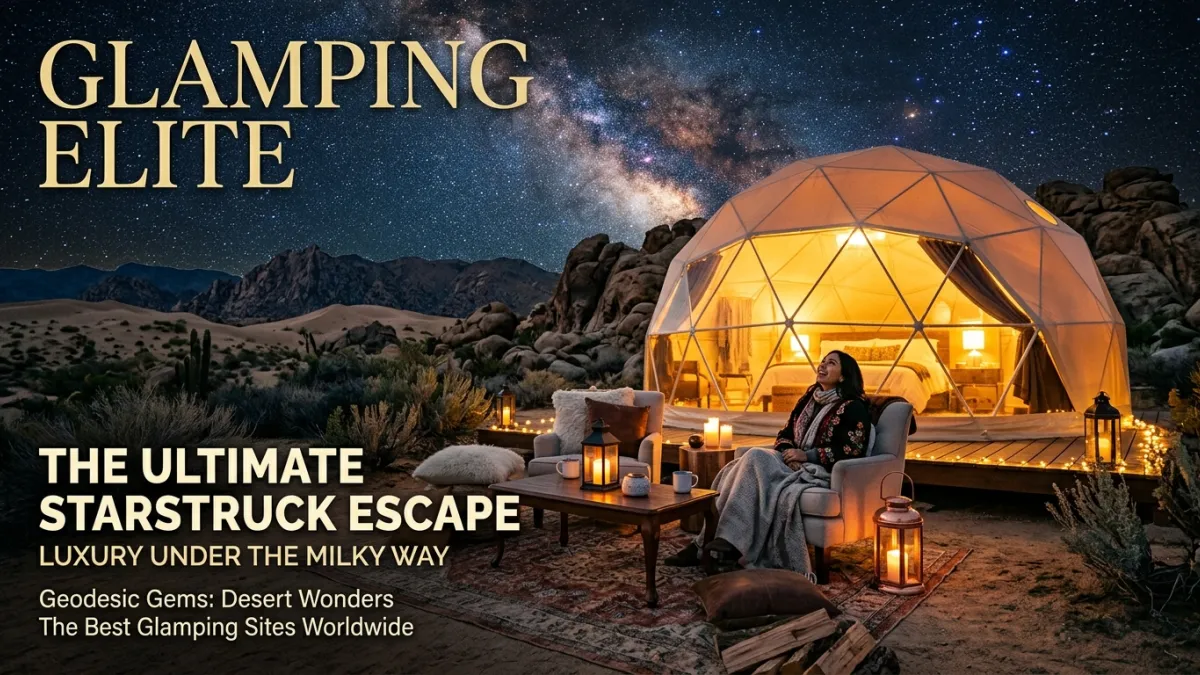
Quick answer: Starstruck glamping combines low-impact luxury accommodation with pristine dark sky locations, allowing you to view celestial bodies in total comfort. By choosing verified International Dark Sky Parks, packing proper stargazing tools, and booking during a new moon, you can experience unpolluted views of the cosmos paired with eco-friendly luxury comforts.
Why Night-Sky Glamping Is Taking Over Wilderness Travel
Light pollution affects over 80 percent of the world’s population, making true dark skies an increasingly rare luxury for urban dwellers. As modern life pulls us further into screen-lit environments, experiential travel has shifted toward raw, unpolluted natural phenomena. Astronomy-focused glamping bridges the gap between rugged outdoor exploration and comfortable travel, providing high-end amenities like transparent roof panels, king-sized beds, outdoor soaking tubs, and heated floors right in the middle of remote wilderness locations.
Beyond comfort, this travel style leans heavily into sustainability and conservation ethics. Top astronomy glamping sites operate off-grid using solar arrays, strict low-lumens lighting policies, and zero-waste waste management protocols. Staying at a site dedicated to dark sky preservation directly funds local conservation efforts, helping protect nocturnal ecosystems from artificial light degradation while giving local communities a sustainable economic alternative to resource extraction.
Whether you choose a clear-roof bubble tent in the high desert or an insulated wooden yurt tucked away in a mountain basin, the immersive nature of dark-sky glamping offers a genuine digital detox. Waking up to 360-degree desert sunrises and falling asleep to shooting stars resets your circadian rhythm, offering a profound sense of perspective that typical resort vacations simply cannot match. To plan your retreat effectively, check out our guide on sustainable travel practices for low-impact outdoor adventures.
Top Global Dark Sky Destinations for Astronomy Enthusiasts
When selecting a destination for stargazing, proximity to recognized Dark Sky Reserves certified by DarkSky International is essential. These regions strictly enforce outdoor lighting restrictions to preserve exceptionally clear nocturnal environments. Below is a breakdown of top global locations, complete with key travel metrics and pricing expectations.
| Destination | Best Time to Visit | Avg Night Temp | Budget Range (Per Night) | Ideal For |
|---|---|---|---|---|
| Atacama Desert, Chile | May – October | -2°C to 5°C (28°F–41°F) | $250 – $650 (Mid to Luxury) | Deep-sky astrophotography, extreme darkness |
| Moab, Utah (USA) | September – November | 2°C to 12°C (35°F–53°F) | $180 – $450 (Budget to Mid) | Red rock topography, family glamping |
| Aoraki Mackenzie, NZ | March – September | -4°C to 4°C (25°F–39°F) | $220 – $550 (Mid to Luxury) | Southern Hemisphere constellations, aurora spotting |
| Wadi Rum, Jordan | October – April | 5°C to 15°C (41°F–59°F) | $120 – $350 (Budget to Mid) | Desert bedouin glamping, Martian landscapes |
San Pedro de Atacama, Chile
Positioned high in the Andean plateau, the Atacama Desert is officially the driest non-polar desert on Earth, boasting over 300 clear nights per year. The high altitude (2,400 meters / 7,870 feet above sea level) combined with virtually zero moisture creates crystalline optical conditions for observing nebula and distant galaxies. Local operator camps feature custom geo-domes equipped with computerized motorized telescopes and resident astronomers who guide guests through private night sessions.
Utah’s Red Rock Country, United States
Utah boasts the highest concentration of certified Dark Sky Parks in the world, including Arches, Canyonlands, and Dead Horse Point. Daily budgets in regions like Moab range from $180 for basic safari tents to $450+ for custom solar-powered suites with transparent glass ceilings. Flight connections into Salt Lake City (SLC) or Grand Junction (GJT) make it highly accessible, with car rental transit times averaging around 4 hours from SLC through scenic desert highways.
Traveler's tip: Always plan your trip during the new moon phase—the three days before, during, and after the new moon. Booking a luxury glamping tent during a full moon sounds romantic, but the bright lunar glow completely washes out the Milky Way and faint nebulae, rendering high-end stargazing equipment virtually useless.
Essential Gear and Etiquette for Stargazing Trips
While high-end glamping sites provide high-grade mattresses and fine linens, outdoor stargazing requires deliberate personal preparation. Temperatures drop rapidly in arid and alpine zones once the sun sets, frequently dropping by 15°C to 20°C (27°F to 36°F) within a couple of hours. Having the right layer setup is the difference between enjoying a six-hour night session and retreating indoors prematurely.
- Red LED Headlamps: Standard white light ruins human night vision adaptation, which takes up to 30 minutes to rebuild. Always use red light mode when walking around your glamping site after dark.
- Thermal Layering System: Bring a high-fill down jacket, merino wool base layers, windproof gloves, and insulated beanies. Sitting motionless under the stars strips body heat fast.
- Binoculars over Telescopes: For beginners, a pair of 10x50 wide-angle binoculars is much easier to maneuver than a complex telescope, offering breathtaking views of lunar craters and star clusters.
- Astronomy Mobile Apps: Download offline stargazing maps like SkyGuide, Stellarium, or Star Walk 2 before heading out into low-reception wilderness zones.
Practicing good field etiquette is critical when staying at shared glamping grounds. Avoid using outdoor floodlights, keep car headlight usage to a absolute minimum, and keep noise levels down late at night. Respecting fellow travelers who are setting up long-exposure photography rigs ensures an enjoyable atmosphere for everyone present. For additional packing ideas, consult our comprehensive adventure packing guide.
Logistics, Budgeting, and Safety Rules
Planning a seamless glamping itinerary requires balancing remote geography with realistic logistical constraints. Most prime dark sky reserves sit hours away from international transit hubs, necessitating high-clearance rental vehicles or coordinated private shuttle transfers. Official government travel advisories (such as the US Department of State or UK Foreign, Commonwealth & Development Office) list remote desert and high-altitude areas as generally very safe, provided you follow basic wilderness safety rules.
A realistic daily budget for a mid-range starstruck glamping trip averages around $300 to $500 per day per couple. This estimate includes comfortable geo-dome accommodation ($200–$350), all-wheel-drive car rentals ($60–$90/day), fuel, entrance fees to national parks ($30–$50), and locally sourced meals ($40–$80/day). While budget options like basic canvas tents exist around $100/night, high-end retreats with private telescopes, outdoor hot tubs, and gourmet dining often push past $700 per night.
Hydration and altitude sickness prevention are key safety factors in high-desert locations like Atacama or Northern Arizona. Drink at least 3 to 4 liters of water daily, limit alcohol intake during your first two days at high elevations, and ensure your vehicle carries extra water, emergency blankets, and a satellite messaging device if driving off-grid. If you are new to wilderness excursions, review our article on budget-friendly trip planning to streamline your logistics.
How to Book Your Ultimate Starstruck Experience
If you want clear, unpolluted night sky views paired with high-end comfort, pick a destination in Utah or the Atacama Desert during the autumn or spring shoulder seasons. Book your accommodation at least 4 to 6 months in advance to secure dates that align directly with the new moon cycle, rent a reliable vehicle, and pack adequate cold-weather layering gear so you can enjoy every moment under the stars.
Frequently Asked Questions
What is the difference between camping and glamping?
Camping relies on traditional, self-pitched tents, ground sleeping pads, and self-prepared meals with minimal amenities. Glamping offers pre-erected luxury structures (like domes or safari tents) featuring hotel-quality beds, electricity, private bathrooms, heating, and fine dining options set directly in natural environments.
Do I need an expensive telescope to enjoy stargazing glamping?
No, you do not need expensive equipment. Dark sky reserves offer views so crisp that thousands of stars, satellites, and the Milky Way core are clearly visible to the naked eye. Most luxury astronomy glamping sites also supply guest telescopes and binoculars on-site.
Is stargazing glamping suitable for families with kids?
Yes, many glamping sites cater specifically to families by offering multi-bed domes, bonfire pits for s'mores, and interactive night sky educational programs tailored for children, making it both an adventurous and educational trip.