
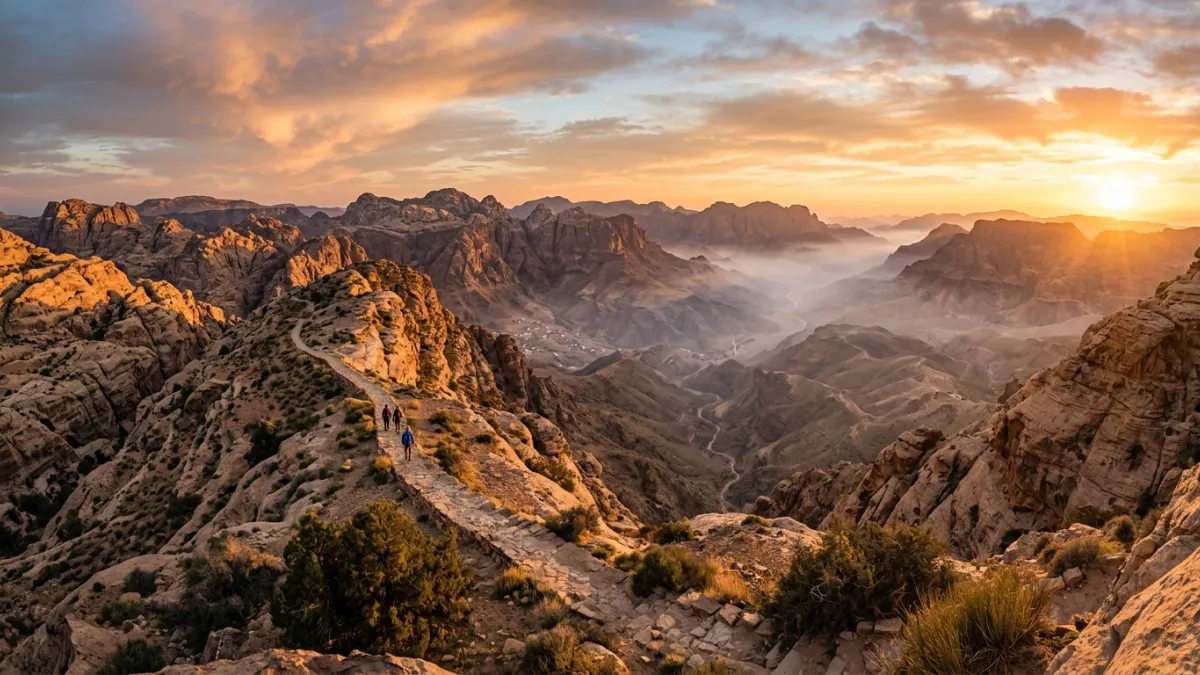
Unveiling Jordan's Best-Kept Secrets: Why Go Beyond the Obvious?
So, you're dreaming of Jordan? Most likely, images of Petra's Treasury and the vast Martian landscapes of Wadi Rum are dancing in your head. And for good reason – they are absolutely breathtaking! But what if I told you that Jordan holds a treasure trove of lesser-known wonders, waiting to be discovered by those willing to wander a little further? This isn't just about avoiding crowds; it's about experiencing the authentic heart of Jordan, connecting with local communities, and uncovering ancient histories nestled in unexpected corners.
Honestly, after over a decade of traversing off-the-beaten-path destinations, I believe the true magic of a place often lies just beyond its most famous landmarks. Jordan offers an incredible opportunity for slow travel – a style of travel where you immerse yourself deeply in a destination, spending more time in one place to truly understand its culture and rhythm. This guide will take you far beyond the typical tourist circuit, equipping you with practical advice, budget insights, and even GPS coordinates for some truly unforgettable hidden hikes.
Your Adventure Map: Jordan's Hidden Gems Revealed
1. Ajloun Forest Reserve & Castle: Green Hills and Crusader History
Forget the desert for a moment and imagine rolling green hills, dense oak forests, and cooler temperatures. That's Ajloun! This mountainous region in northern Jordan offers a refreshing contrast to the south. The Ajloun Forest Reserve, managed by the Royal Society for the Conservation of Nature (RSCN), is a haven for nature lovers and hikers. You can spot wild boar, hyenas, and even unique bird species here. Nearby, the magnificent Ajloun Castle (Qal'at Ar-Rabad) stands proudly atop a hill, a 12th-century Muslim fortress built to ward off Crusader invasions. It offers panoramic views that stretch for miles on a clear day.
- Recommended Stay: 2-3 days to explore the reserve and castle thoroughly.
- Accommodation Example: The Ajloun Forest Reserve's Cabins & Wild Camping offer an immersive experience, costing around $80-120/night for a cabin or $30-40 for tent rental. Book directly via RSCN.
- Hidden Hike Tip: The Soap House Trail (approx. 4-5 hours, moderate) takes you through the reserve to a local women's cooperative producing natural soaps. A great way to support the community! Trailhead GPS: 32.3242° N, 35.7891° E (Near the RSCN Nature Shop).
2. Dana Biosphere Reserve: Jordan's Grand Canyon
Moving south but still far from the tourist throngs, you'll find the Dana Biosphere Reserve, Jordan's largest nature reserve. This incredible landscape encompasses rugged mountains, wadis, and desert, supporting an astonishing diversity of wildlife and plant species. It's often referred to as Jordan's "Grand Canyon" due to its dramatic, multi-layered rock formations and deep gorges. The traditional village of Dana, perched on a cliff edge, offers breathtaking views and a glimpse into a timeless way of life. This is a prime spot for overlanding – self-reliant travel to remote destinations where the journey is the primary goal – though day hikes are more common.
- Recommended Stay: 3-4 days to fully appreciate the diverse trails.
- Accommodation Example: Feynan Ecolodge (within the reserve) is a world-renowned, candlelit, solar-powered lodge offering an unforgettable stay for around $150-250/night, including meals and activities. For budget travelers, local guesthouses in Dana Village, like Dana Tower Hotel, offer rooms from $40-70/night.
- Hidden Hike Tip: The Wadi Dana Trail (approx. 6-8 hours, challenging) descends from Dana Village to Feynan Ecolodge, showcasing incredible geological formations. You'll need to arrange transport back from Feynan. Trailhead GPS: 30.6698° N, 35.5684° E (Dana Village viewpoint). [Exploring Jordan's Best Hiking Trails]
3. Umm Qais (Gadara): Roman Grandeur with a View
Nestled in the northern highlands, overlooking the Sea of Galilee (Lake Tiberias) and the Golan Heights, lie the impressive ruins of ancient Gadara, now known as Umm Qais. This was once a thriving Greco-Roman city, part of the Decapolis, and its well-preserved theatres, basilica, and colonnaded street offer a glimpse into a glorious past. The views alone are worth the trip – you can see three countries (Jordan, Syria, Israel) from a single vantage point. To be fair, it's not entirely "hidden" but certainly receives far fewer visitors than Jerash.
- Recommended Stay: A half to full day trip from Amman or Ajloun.
- Hidden Experience Tip: After exploring the ruins, enjoy a traditional meal at a local restaurant with panoramic views, like the Rest House Umm Qais, which offers delicious local fare and stunning scenery. Don't miss the small, charming museum on site.
4. Azraq Wetland Reserve: An Oasis in the Desert
East of Amman, in the heart of Jordan's eastern desert, lies the surprising Azraq Wetland Reserve. This unique oasis, once a vast marshland, is a critical stopover for migratory birds traveling between Africa and Eurasia. While its water levels have fluctuated dramatically over the years, efforts are underway to restore it, and it remains a vital ecosystem. It's a peaceful spot for birdwatching and gentle walks on boardwalks over the marsh. It offers a completely different natural experience than the mountains or deserts.
- Recommended Stay: A half-day visit, often combined with a trip to the nearby Desert Castles (Qasr Amra, Qasr Kharana, Qasr Azraq).
- Activity Tip: Rent binoculars from the visitor center and spend time in the bird hides. It's an unexpectedly serene experience in the middle of a vast desert landscape.
Planning Your Authentic Jordanian Journey
Best Time to Visit & Realistic Budgets
Choosing the right time can make or break your trip, especially when venturing into nature. For hiking and exploring these Jordan hidden gems, the shoulder seasons are your best bet. Shoulder season refers to the travel periods just before or after the peak season, offering good weather and fewer crowds. This means March-May (spring) for wildflowers and comfortable hiking temperatures, and September-November (autumn) for pleasant weather and clear skies. Summer (June-August) can be scorching hot, making extensive hiking uncomfortable, while winter (December-February) can be cold and rainy, especially in the northern mountains.
Budgeting for an off-the-beaten-path trip can vary. Here's a realistic daily breakdown for intermediate explorers:
| Category | Budget Traveler (USD/day) | Mid-Range Traveler (USD/day) |
|---|---|---|
| Accommodation (Guesthouse/Eco-lodge) | $30 - $60 | $70 - $150 |
| Food (Local eateries/Cooked meals) | $15 - $25 | $30 - $50 |
| Transportation (Local bus/Shared taxi/Fuel) | $10 - $20 | $25 - $40 (if renting a car) |
| Activities/Entrance Fees | $10 - $20 | $20 - $40 |
| Total Estimated Daily Budget | $65 - $125 | $145 - $280 |
Remember, these are estimates. My personal experience backpacking through Jordan has often leaned towards the lower end of the mid-range, especially when opting for local buses and street food. For example, imagine sharing a delicious mansaf (Jordan's national dish) with a local family in a small village, a meal that cost me less than $10 but provided an invaluable cultural experience.
Transportation & Getting Around
While a rental car offers the most flexibility for reaching these off-the-beaten-path destinations, it's not your only option. Public transport in Jordan consists mainly of local buses and servees (shared taxis). These are incredibly affordable, often costing just a few dollars for intercity travel, but they can be infrequent and don't always go directly to remote sites. For places like Dana or Ajloun, you might need to combine a bus with a private taxi for the last leg. Car rental typically costs $30-50/day for a compact car.
Navigating Jordan Safely and Sustainably
Safety, Cultural Etiquette, and Sustainable Practices
Jordan is generally a very safe country, even for solo travelers. However, common sense prevails. When hiking, especially in remote areas, always inform your accommodation of your plans, carry plenty of water, and consider hiring a local guide. In my opinion, guides not only ensure your safety but also enrich your experience with local knowledge and stories. This is especially true for longer, more challenging trails in places like Dana.
Culturally, Jordanians are incredibly hospitable and friendly. Dress modestly, particularly when visiting religious sites or smaller villages; covering shoulders and knees for women is respectful. Always accept offers of tea or coffee – it's a sign of welcome. When haggling in markets, do so with a smile and good humor. Remember, you're a guest in their country!
For sustainable travel practices, focus on minimizing your environmental footprint. Stick to marked trails, carry out all your trash (including organic waste), and conserve water, which is a precious resource in Jordan. Support local businesses, guesthouses, and community-based tourism initiatives like those in Ajloun and Dana. This ensures your travel dollars directly benefit the people and places you visit, fostering a more responsible and enriching experience for everyone.[Sustainable Travel Tips for Adventurers]
What to Watch Out For & Common Mistakes
Venturing beyond the main circuit means being prepared. One common mistake is underestimating distances and travel times. While Jordan isn't huge, roads outside major highways can be slow, and public transport requires patience. Don't try to cram too much into one day. Another pitfall is not carrying enough cash (Jordanian Dinars, JOD). Many smaller guesthouses, local eateries, and village shops, especially in the hidden gems, won't accept credit cards. Always have a supply of smaller denominations.
Finally, beware of disregarding local advice regarding hiking trails or cultural norms. Locals know their land and customs best. If someone advises against a certain trail due to weather or difficult terrain, listen to them. It's not about being overly cautious, but about being respectful and safe. But what would you do in a situation where a local offers a shortcut that seems a bit too adventurous? Always trust your gut and prioritize safety over speed.
Frequently Asked Questions
Is Jordan safe for solo female travelers?
Yes, Jordan is generally very safe for solo female travelers. Take standard precautions, dress modestly, and use reputable transport. Jordanians are incredibly welcoming and protective.
Do I need a Jordan Pass for these sites?
The Jordan Pass primarily covers Petra, Wadi Rum, and many other major sites. While it might include some of these lesser-known spots, always check its current inclusions. For sites not covered, entrance fees are usually minimal.
Can I find vegetarian food easily?
Absolutely! Jordanian cuisine is rich in vegetarian options. Think hummus, falafel, salads, grilled vegetables, and delicious lentil soups. Just let your host or server know your dietary preferences.
There you have it, fellow wanderer. Jordan is so much more than its famous postcard views. It's a land of ancient secrets, stunning natural diversity, and heartwarming hospitality that awaits those ready to step a little further off the beaten path. These Jordan hidden gems offer a chance to truly connect with the country and its people, creating stories and memories that will last a lifetime. So, pack your bags, lace up your hiking boots, and get ready to uncover the real Jordan. The adventure is calling!