Picture this: you're navigating a labyrinthine market in a foreign city, the air thick with the scent of sizzling meats, exotic spices, and something delightfully sweet you can't quite identify. Vibrant colors assault your senses – pyramids of fresh fruit, mountains of chilies, and handcrafted textiles. A cacophony of vendors' calls, lively music, and the chatter of locals creates a symphony that draws you deeper. Suddenly, you spot it: a humble cart, surrounded by a queue of eager patrons, where a smiling *señora* is expertly flipping corn tortillas or stuffing golden pastries. This isn't just a meal; it's an immersion, a direct pipeline into the heart and soul of Latin American culture. For a seasoned wanderer like myself, who’s spent over a decade tracing the continent’s back roads and bustling arteries, street food isn't merely sustenance – it's the most authentic, affordable, and exhilarating way to truly know a place.

The Soul of the Streets: Why Street Food is the Ultimate Cultural Immersion

Forget fancy restaurants; the true culinary spirit of Latin America thrives on its streets. Here, recipes passed down through generations are perfected daily, often for pennies on the dollar compared to sit-down establishments. Eating street food is a form of slow travel, allowing you to linger, observe, and connect. It's about more than just filling your stomach; it's about witnessing the rhythm of daily life, sharing a laugh with a vendor, and understanding the local palate in its purest form. Every steaming *taco*, every crispy *empanada*, every zesty *ceviche* tells a story. It's a story of local ingredients, regional traditions, and the unwavering spirit of the people who prepare it. For aspiring travelers, solo adventurers, or even families looking to broaden their horizons, embracing street food offers unparalleled value – not just financially, but experientially. You’ll not only eat well but also gain a deeper appreciation for the communities you visit, directly supporting local entrepreneurs and their families. This is the real, unvarnished Latin America, served on a paper plate.
Latin America’s Best Street Food

A Taste Tour: Iconic Street Eats & Where to Find Them

Navigating the vast culinary landscape of Latin America can feel overwhelming, but certain dishes are non-negotiable rites of passage. I've spent countless hours, and a fair share of pesos, discovering these gems. Here’s a breakdown of some absolute must-tries and where to hunt them down.

Mexico: Taco Heaven & Beyond

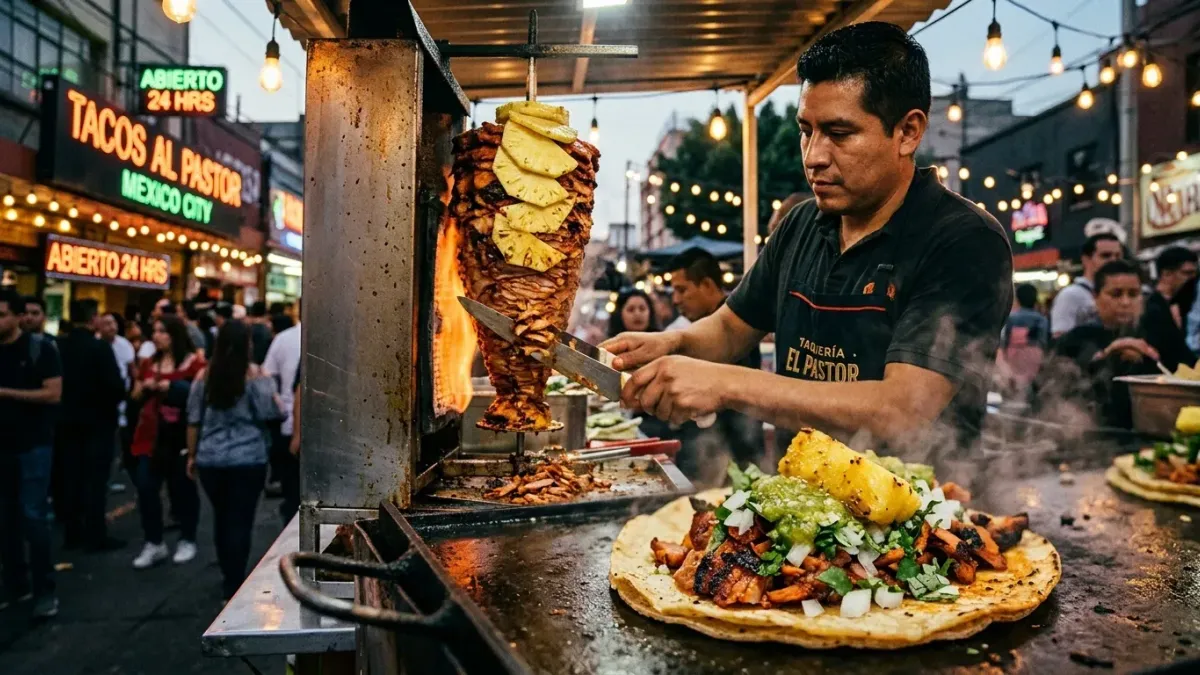
Mexico is undeniably the king of street food, and *tacos* are its crown jewel. Forget the hard-shell variety you know; authentic Mexican street tacos are a revelation. My personal favorite? The *Tacos al Pastor* – marinated pork cooked on a vertical spit (like a döner kebab), thinly sliced onto small corn tortillas, topped with pineapple, onion, cilantro, and a squeeze of lime. You’ll find them everywhere, but look for carts with a constantly turning *trompo* (the vertical spit) for the freshest experience. But Mexico's street food prowess extends far beyond tacos. In Mexico City, particularly in neighborhoods like Roma Norte or Condesa, keep an eye out for *Tacos de Suadero* (slow-cooked beef brisket) or *Carnitas* (pork confit). Don't miss *Elote*, grilled corn on the cob slathered with mayonnaise, chili powder, lime, and *cotija* cheese – it’s addictive! For a truly unique experience, head to Oaxaca. Here, you'll encounter *Tlayudas*, large, crispy corn tortillas topped with beans, cheese, meat, and vegetables, often cooked over an open fire. You might even find adventurous options like *tacos de chapulines* (grasshopper tacos), a crunchy, protein-packed local delicacy. * Best Time to Visit: Mexico City: March-May (shoulder season, pleasant weather, fewer crowds). Oaxaca: October-April (dry season, ideal for exploring). Mérida: November-February (cooler, less humid). * Recommended Stay: At least 4-5 days in Mexico City to explore its markets and diverse food scene; 3-4 days in Oaxaca for its unique regional flavors and mezcal. * Realistic Daily Budget (Mexico): * Budget Traveler: $40-60 USD (hostel bed, street food meals, local transport). You can eat very well on $10-15/day from street stalls. * Mid-Range Traveler: $80-120 USD (private room in a guesthouse, mix of street food and sit-down meals, occasional taxi). * Transportation: Mexico City has an excellent and affordable metro system (around $0.25 USD per ride). For longer distances, comfortable ADO buses connect major cities efficiently (e.g., Mexico City to Oaxaca around $40-50 USD). Within cities, walking is best for street food hunting, or use ride-sharing apps like Uber/Didi.

Colombia & Venezuela: Arepas & Empanadas Galore

Moving south, the humble *arepa* reigns supreme. While originating in what is now Venezuela and Colombia, these grilled or fried cornmeal patties are a staple throughout the region. In Colombia, you'll find countless variations. My favorite has to be the *Arepa de Huevo* from Cartagena – a fried *arepa* stuffed with an egg, often with ground beef, which makes for an incredibly satisfying breakfast or snack. In Medellín, try the simpler, cheesy *arepas* that accompany almost every meal. Colombian *empanadas* are typically made with a cornmeal crust, deep-fried, and filled with potato, meat, or both, served with a spicy *ají* sauce. While travel to Venezuela is currently challenging due to political instability, the Venezuelan *arepa* is a culinary icon worth noting for its influence. These are generally thicker and cut open to be stuffed with incredible fillings like *Reina Pepiada* (shredded chicken and avocado salad) or *Pabellón Criollo* (shredded beef, black beans, and plantains). If you can't make it to Venezuela, many Colombian cities, especially Bogotá and Medellín, have restaurants run by Venezuelan expats serving up these incredible variations. * Best Time to Visit: Colombia: December-March and July-August (dry seasons, ideal for exploring cities and coffee regions). Cartagena: December-April (less humid). * Recommended Stay: 3-4 days in Cartagena (coastal flavors), 4-5 days in Medellín or Bogotá (diverse urban experiences). * Realistic Daily Budget (Colombia): * Budget Traveler: $35-55 USD (hostel, street food meals, local buses). A filling *arepa* or *empanada* can be $1-3 USD. * Mid-Range Traveler: $70-110 USD (guesthouse, mix of street food and mid-range restaurants, occasional taxi/ride-share). * Transportation: Cities like Bogotá and Medellín have extensive bus systems and the Medellín Metro is excellent. Long-distance buses are comfortable and affordable (e.g., Medellín to Cartagena around $30-50 USD).

Peru: Ceviche, Anticuchos & More

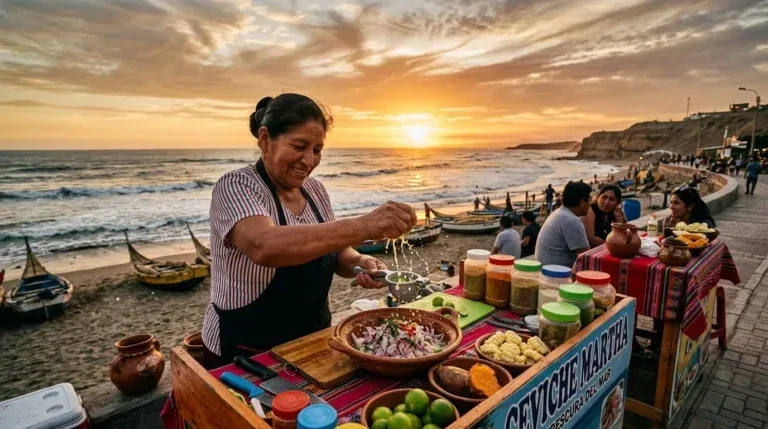
Peru, a global culinary powerhouse, brings its sophisticated flavors to the streets. The most famous, of course, is *Ceviche* – fresh raw fish marinated in lime juice, *ají* (chili peppers), red onion, and cilantro, often served with sweet potato and corn. While many high-end restaurants serve it, you’ll find fantastic versions at humble *cevicherías* and even street stalls, particularly in coastal cities like Lima. Just be sure to find a vendor with high turnover to ensure freshness. Another must-try street food are *Anticuchos*, marinated beef heart skewers grilled over charcoal. Trust me, don’t let the "beef heart" part deter you; they are incredibly tender, smoky, and flavorful, often served with boiled potato and a spicy sauce. You'll find these sizzling delights around parks and plazas in the evenings. And for a sweet treat, hunt down *Picarones* – pumpkin and sweet potato doughnuts, deep-fried and drenched in *chancaca* (fig syrup). * Best Time to Visit: Lima/Coast: December-April (summer, warm, sunny). Cusco/Andes: May-October (dry season, cooler nights but clear days). * Recommended Stay: 3-4 days in Lima for its diverse culinary scene; 2-3 days in Cusco after acclimating to the altitude. * Realistic Daily Budget (Peru): * Budget Traveler: $40-65 USD (hostel, street food/local eateries, local transport). A *ceviche* from a good street vendor might be $5-8 USD. *Anticuchos* around $3-5 USD. * Mid-Range Traveler: $80-130 USD (guesthouse/boutique hotel, mix of dining options, taxis). * Transportation: Lima’s public transport can be chaotic; the *Metropolitano* bus system is efficient for some routes. Taxis and ride-sharing apps are common. For inter-city travel, Cruz del Sur and Oltursa offer comfortable bus services (e.g., Lima to Paracas around $15-20 USD).

Chile & Argentina: Empanadas, Choripán & Completo

In the Southern Cone, hearty, flavorful street foods are the norm. *Empanadas* are ubiquitous, but here they often feature a pastry-like dough, baked or fried, with various fillings. In Chile, look for *empanadas de pino* (beef, onion, hard-boiled egg, olive) or *queso* (cheese). Argentina’s *empanadas* are legendary, with regional variations like *salteñas* (juicy beef, potato) or *tucumanas* (spicier, often with chicken). Another essential is *Choripán* – a grilled *chorizo* sausage in a crusty bread roll, typically topped with *chimichurri* (a vibrant herb and garlic sauce). It's simple, delicious, and a staple at any outdoor gathering, sporting event, or market. In Chile, you'll also find the hearty *Completo*, a hot dog piled high with avocado, tomato, and a generous dollop of mayonnaise. It’s a comfort food icon, perfect after a long day of exploring Santiago. * Best Time to Visit: Argentina/Chile: November-March (summer, ideal for Patagonia; Buenos Aires is warm). Shoulder seasons (Oct-Nov, Mar-Apr) offer pleasant weather and fewer crowds in cities. * Recommended Stay: 4-5 days in Buenos Aires (diverse neighborhoods, food, culture); 3-4 days in Santiago. * Realistic Daily Budget (Argentina/Chile): * Budget Traveler: $50-80 USD (hostel, street food/local *parrillas*, public transport). *Choripán* around $3-5 USD. * Mid-Range Traveler: $100-160 USD (mid-range hotel, mix of dining, occasional taxi). Note: Argentina's economic situation means prices can fluctuate wildly; sometimes it's incredibly cheap, other times less so. * Transportation: Both Buenos Aires and Santiago have excellent metro systems. Long-distance buses are a popular and comfortable way to travel between cities and even countries (e.g., Santiago to Mendoza, Argentina, around $30-50 USD).

Navigating the Street Food Scene Safely & Sustainably

As much as I advocate for diving headfirst into street food, a little prudence goes a long way. You want to remember your culinary adventures fondly, not from a hospital bed.

Food Safety First: Tips for a Happy Stomach

My cardinal rule: eat where the locals eat. A stall with a long queue of locals is almost always a good sign – high turnover means fresh ingredients are constantly being prepared. Look for vendors who are actively cooking in front of you, where food isn't sitting out for too long. Observe their hygiene: are they handling money and food with different hands or wearing gloves? Are the condiments covered? Always opt for cooked food where possible, especially meats. If choosing *ceviche*, ensure the fish looks bright and fresh, and the stand seems meticulously clean. Avoid tap water; stick to bottled water or purified water. Carry hand sanitizer and use it before and after eating. Trust your gut (literally!): if a place looks dirty or smells off, just walk away. There will always be another delicious option around the corner.

Cultural Etiquette & Communication

A little Spanish goes a long way. Learning basic phrases like "Hola" (Hello), "Gracias" (Thank you), "¿Cuánto cuesta?" (How much does it cost?), and "Por favor" (Please) will endear you to vendors. It’s customary to greet the vendor with a friendly "Buen provecho" (enjoy your meal) if you see others eating, and a simple "gracias" when paying. Don't be afraid to ask about ingredients if you have allergies, though be prepared that English might not always be spoken. A simple "sin picante" (without spice) can save you from an unexpectedly fiery experience!

Sustainable Street Snacking

As responsible travelers, we have a role to play in minimizing our impact. Consider bringing your own reusable cutlery and a small container for leftovers to reduce plastic waste. Many street vendors in Latin America still use single-use plastics. Supporting local street vendors directly injects money into the local economy, often benefiting families and small businesses more directly than larger chains. Be mindful of your waste, and always dispose of your trash properly. Embrace the concept of "leave no trace", even with your discarded *empanada* wrapper.

Planning Your Culinary Adventure: Budgeting & Logistics

Embarking on a street food quest in Latin America is incredibly rewarding, and surprisingly budget-friendly if you plan smart.

Realistic Budgets for Street Food Enthusiasts

One of the biggest advantages of street food is its affordability. While prices vary by country and city, you can generally expect to pay: * Street Food Meal: $1-5 USD per dish (e.g., 2-3 tacos, an *arepa*, a serving of *anticuchos*). * Basic Local Meal (small restaurant/lunch counter): $5-10 USD. * Accommodation (Hostel Dorm): $10-25 USD per night. * Accommodation (Budget Guesthouse/Private Room): $30-60 USD per night. * Local Transport: $0.50-$2 USD per ride (bus/metro). * Daily Budget (Budget Traveler): Around $40-65 USD, especially in countries like Mexico, Colombia, Peru. * Daily Budget (Mid-Range Traveler): Around $80-130 USD, allowing for more comfortable stays and a mix of street food and sit-down meals.

Best Time to Visit & Recommended Durations

Generally, the shoulder season (the periods between peak and off-peak seasons) often offers the best balance of good weather, fewer crowds, and sometimes lower prices. This is typically spring (March-May) and fall (September-November) for many countries. For example, visiting Mexico City in April means pleasant temperatures without the intense summer heat or winter chills. For Andean regions like Peru, the dry season (May-October) is generally preferred for hiking and clear skies. To truly immerse yourself in a city’s street food scene, I recommend a minimum stay of 3-4 full days. This allows you to explore different neighborhoods, visit various markets, and return to your favorite spots. For a broader country-specific culinary journey, aim for 2-3 weeks, allowing time for travel between regions and deeper exploration.

Getting Around Like a Local

For street food hunting, your best friend is your feet. Walking allows you to stumble upon those hidden gem stalls that guidebooks often miss. When distances are too far, embrace public transport. Most major cities have efficient and incredibly cheap bus systems or metros. Terms like "colectivo" (shared taxi or minivan) are common, offering a slightly faster, though still very local, way to get around. For convenience and safety, especially at night, ride-sharing apps like Uber, Didi, or Cabify are widely available in larger cities. If you're considering a more extensive journey, overlanding – traveling overland by vehicle, often self-driven or via organized tours – can offer incredible freedom to explore rural areas and their unique culinary traditions. The world of Latin American street food is a vibrant tapestry waiting to be explored. It’s an adventure for your taste buds, a window into diverse cultures, and a chance to connect with people in a truly authentic way. So pack your bags, bring an open mind (and an empty stomach!), and prepare for a culinary journey that will linger in your memory long after the last bite.